
Geotechnical Frontiers 2025 Outlook From China Leading Manufacturer TW: New Advances in Geotextile Fabric Use
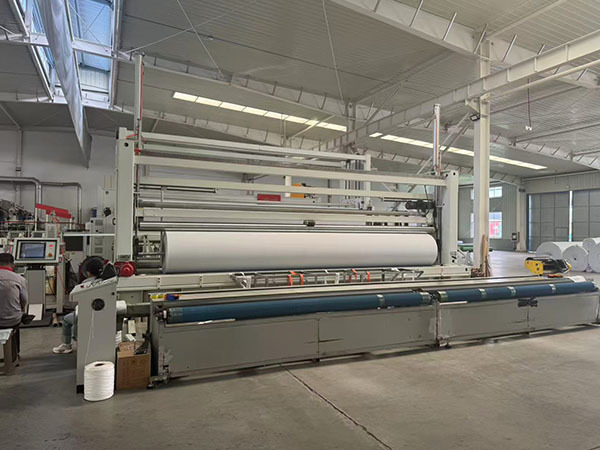
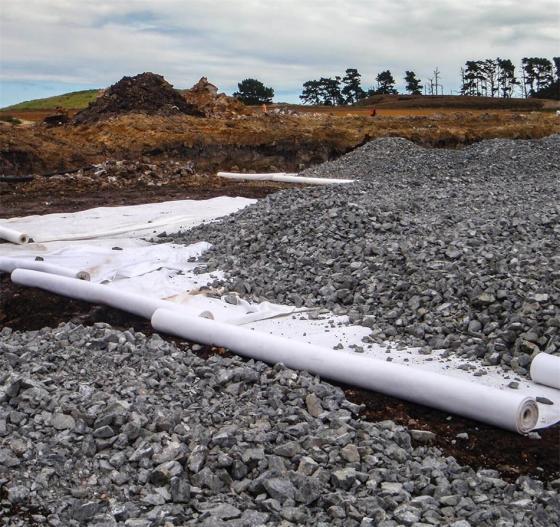
Shandong Taiwei Engineering Materials Co., Ltd.(TW Geosynthetics), as a China Leading Geotextile Fabric Manufacturer, continues to redefine the standards of material durability and filtration efficiency. Geotextile fabric serves as a permeable geosynthetic material used to enhance soil properties by performing functions such as separation, filtration, reinforcement, protection, and drainage. In the modern construction era, these fabrics are categorized into two primary types: non woven geotextile fabric and woven geotextile fabric. Non-woven variants, often manufactured through needle-punching processes, offer superior hydraulic properties and flexibility, making them ideal for filtration and drainage in landfills or road embankments. Conversely, woven fabrics provide high tensile strength and low elongation, serving as a robust solution for soil reinforcement and stabilization in heavy-duty load-bearing applications. By integrating advanced polymer technology, TW ensures that its products provide the necessary mechanical properties to withstand harsh subsurface environments.
Insights from the Geotechnical Frontiers 2025 Forum
The gathering at Geotechnical Frontiers 2025 served as a pivotal platform for engineers, researchers, and manufacturers to exchange insights on the next generation of geotechnical solutions. The event highlighted a clear industry trend: the integration of smart materials and eco-friendly manufacturing processes. Industry data suggests a rising demand for geosynthetics that can offer a service life exceeding 50 years while minimizing carbon footprints. As an active participant in the Geotechnical Frontiers series, TW demonstrated how large-scale manufacturing capabilities can align with precision engineering to meet these global demands.
The industry is currently transitioning from basic soil stabilization to complex environmental containment systems. This shift is driven by the need for more efficient waste management facilities, resilient coastal defenses, and high-speed transportation networks. For a geotextile fabric manufacturer, staying ahead of this curve requires more than just high output; it demands a deep understanding of soil mechanics and chemical resistance. The trend toward multi-functional composites—where geotextiles are bonded with geomembranes or drainage networks—is becoming the standard for modern hydraulic engineering and environmental protection projects.
Engineering Excellence: The Core Capabilities of TW
A manufacturer's capacity to deliver consistent quality at a massive scale is the foundation of infrastructure reliability. TW operates with a specialized focus on the production and management of a comprehensive suite of geosynthetics, including geomembranes, drainage boards, geogrids, and three-dimensional composite drainage networks. With an annual output of more than 20 million square meters of geotextile fabric and over 10 million square meters of geomembrane composite membranes, the company provides the logistical and technical backbone for international infrastructure projects.
The technical superiority of these materials lies in the precision of the manufacturing equipment and the expertise of the technical personnel involved. Beyond simple production, the focus is on the long-term performance of the geotextile fabric in varied pH environments and under high mechanical stress. Whether it is a plastic blind ditch for subterranean drainage or a three-dimensional vegetation network for slope protection, each product is designed to solve a specific geological challenge. This diversified portfolio allows engineers to source integrated solutions from a single, reliable entity, ensuring material compatibility across complex layers of construction.
Applications and Strategic Infrastructure Solutions
The practical application of geotextile fabric spans across diverse sectors, from hydraulic engineering to transport infrastructure. In highway construction, the use of non-woven fabrics as a separator between different soil layers prevents the intermixing of fine-grained soils with aggregate bases. This maintains the structural integrity of the road and extends its lifespan by preventing the "pumping" effect under repeated traffic loads. In more demanding environments, such as railway subgrades or steep slope reinforcements, woven geotextile fabric is utilized for its exceptional load distribution capabilities.
Water conservancy projects represent another significant area of application. The filtration properties of the geotextile fabric allow water to pass through while retaining soil particles, preventing internal erosion in dams and riverbanks. TW’s involvement in large-scale drainage projects often utilizes three-dimensional composite drainage networks and flexible water pipes to manage pore water pressure effectively. These systems are essential for preventing landslides and ensuring the stability of retaining walls in urban developments.
Case Studies and Performance in the Field
Real-world performance is the ultimate benchmark for any geotextile fabric manufacturer. TW has contributed to various high-profile projects where soil conditions were particularly challenging. In coastal reclamation projects, where soil is often saturated and soft, high-strength geogrids and geotextiles have been deployed to accelerate consolidation and provide a stable working platform for heavy machinery. These projects demonstrate the material's resistance to biological degradation and chemical exposure, ensuring that the reinforcement remains intact despite constant exposure to seawater.
In environmental protection, specifically landfill liners and mining leach pads, the combination of geomembranes and geotextile fabric provides a redundant barrier system. The fabric acts as a protective cushion for the geomembrane, preventing punctures from sharp stones in the subgrade while simultaneously facilitating the collection of leachate through drainage layers. These applications highlight the company’s ability to produce materials that meet stringent environmental safety regulations while maintaining cost-effectiveness for the project owners.
Advancements in Geotextile Manufacturing and Sustainability
Innovation at TW is driven by the goal of optimizing the interaction between synthetic materials and natural soil. Recent breakthroughs in the production of three-dimensional vegetation networks have enabled more effective "green" engineering, where geotextiles support the growth of plants on steep slopes to prevent erosion naturally. This hybrid approach—combining mechanical reinforcement with biological stabilization—is a cornerstone of modern sustainable design.
Furthermore, the refinement of glass fiber grids and composite membranes has opened new possibilities in asphalt reinforcement, reducing reflective cracking in road resurfacing projects. By focusing on the durability of the geotextile fabric, the company helps reduce the frequency of maintenance cycles, thereby lowering the total lifecycle cost of the infrastructure. As the industry advances, the focus remains on enhancing the tensile strength and UV resistance of these materials to ensure they can withstand the increasingly volatile weather patterns seen globally.
The synergy between large-scale production power and rigorous quality control protocols ensures that every square meter of material delivered to a site meets international standards. Following the technical exchanges at Geotechnical Frontiers 2025, the emphasis remains on how manufacturers like TW can continue to bridge the gap between theoretical soil mechanics and practical, on-site execution.
For more information regarding TW Geosynthetics’s technical specifications and project applications, please visit the official website: https://www.twgeo.com/.
Shandong Taiwei Engineering Materials Co., Ltd.
Shandong Taiwei Engineering Materials Co., Ltd.
+86 196 0538 3580
taiwei@cngeosynthetics.com
Visit us on social media:
Facebook
YouTube
TikTok
Legal Disclaimer:
EIN Presswire provides this news content "as is" without warranty of any kind. We do not accept any responsibility or liability for the accuracy, content, images, videos, licenses, completeness, legality, or reliability of the information contained in this article. If you have any complaints or copyright issues related to this article, kindly contact the author above.
