

Natural Waterscapes Launches Pond Soil Analysis Tool for Leaking Ponds, Lakes and Reservoirs
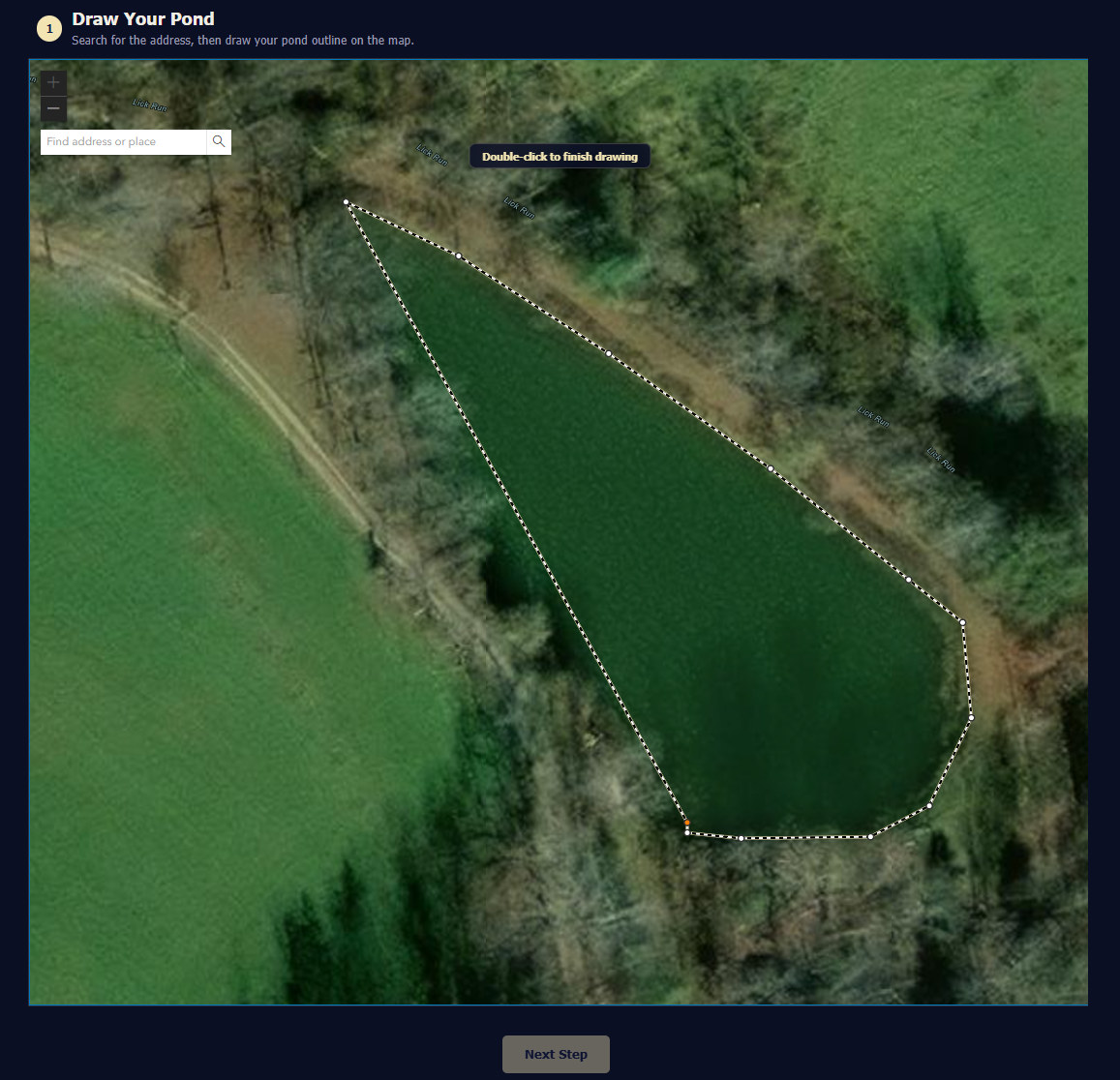
Interactive pond mapping tool for soil analysis
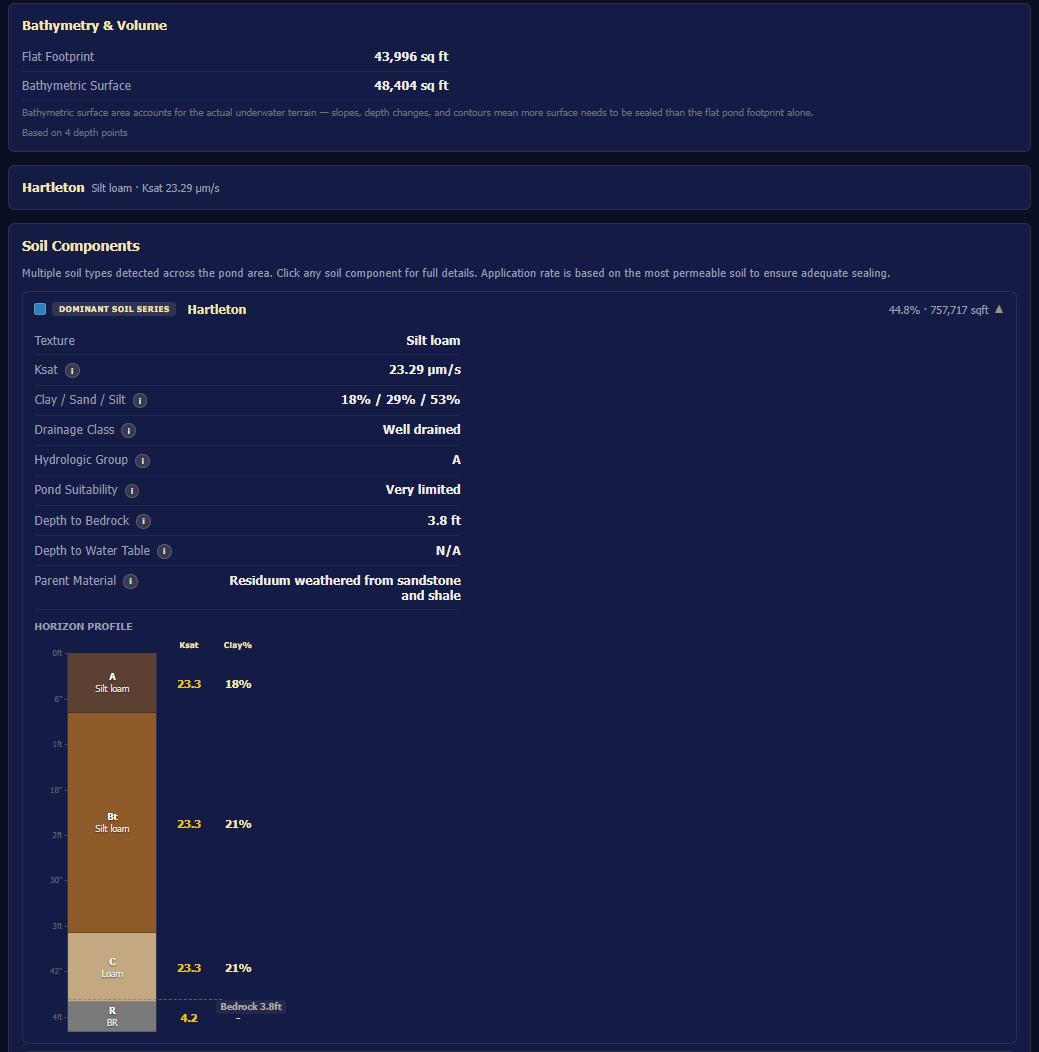
Sample output including the three-dimensional surface of the pond bottom
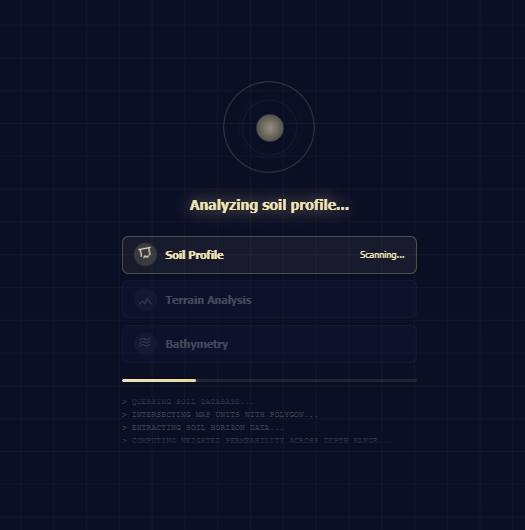
Soil data analysis and report generation typically takes less than 30 seconds
New online resource diagnoses water loss, guide pond & lake sealing decisions, improve planning, and evaluate soils before new pond, lake, & dam construction.
Natural Waterscapes says the tool is intended to turn scattered site clues into a more usable planning report. Instead of relying only on shoreline size or a general soil map, users can combine mapped geometry, leak symptoms, and depth inputs to build a report that supports water-retention planning, pond sealing decisions, and construction budgeting. The company’s published terms state that the analysis and product recommendations are based on realtime extraction and processing of USDA soil survey data together with user-provided information, and that the tool produces a personalized soil and product analysis report for review. The analysis utilizes a proprietary algorithm, developed over decades of pond soil analysis and amendment, to evaluate the site conditions.
The example report provided by Natural Waterscapes shows the level of detail users can expect. On page 1, the report identifies surface area, dominant soil series, texture, hydraulic conductivity, clay/sand/silt percentages, drainage class, pond suitability, and water table depth. On page 2, it adds a horizon-by-horizon soil profile showing clay content increasing from 31 percent near the surface to 49 percent and then 52 percent deeper in the profile. That kind of output helps translate soil structure into water-retention implications rather than leaving users with a simple soil label and no context.
The sample report also shows why bathymetry matters. In that example, the mapped flat footprint was 13,664 square feet, while the bathymetric surface used for application planning was 16,589 square feet. The report then translated that difference into exact material estimates, including 33,178 pounds, or 16.6 tons, for one bentonite-based treatment path, while also presenting an alternative in-water treatment path for widespread seepage. It also flagged a high water table at 1.0 foot and noted that dewatering would be required for certain mixed-method applications of PondLock Bentonite Clay. Those details make the report feel operational, not theoretical.
That broader water-loss framing is relevant well beyond backyard ponds. EPA identifies reservoirs and storage as part of community drinking water infrastructure, and its guidance on finished water storage notes that these facilities are used to provide water, equalize pressure during high demand, and serve as emergency backup supply. NRCS guidance for ponds and reservoirs also notes that satisfactory performance ordinarily assumes seepage losses do not exceed 2 to 3 inches per month, while annual evaporation can range from about 3 feet or less in some regions to 6 feet or more in others. In practical terms, reducing avoidable seepage can matter for irrigation reservoirs, source-water storage, and other managed waterbodies where retained volume directly affects operations.
“The real value is turning a vague water-loss problem into a more specific action plan,” said Jonathan Klotz, President at Natural Waterscapes. “Users can map the waterbody, work through the short questionnaire, add depth estimates, and get a report that helps them understand whether the site points to favorable retention, a seepage issue, an embankment concern, or the need for a more proactive sealing strategy. Analysis that used to take hours now happens accurately in under a minute!”
According to Natural Waterscapes, the workflow ends with a downloadable PDF report and an expert review step, giving users instant analysis followed by professional follow-up to guide the user to the best outcome. By combining map-based inputs, soil data, bathymetric modeling, and human review, Natural Waterscapes is positioning the Pond Soil Analysis Tool as a practical resource for diagnosing leaking ponds, evaluating water loss in lakes and reservoirs, guiding pond sealing and lake sealing decisions, and reducing uncertainty before construction begins.
Jonathan Klotz
Natural Waterscapes LLC
email us here
Visit us on social media:
LinkedIn
Instagram
Facebook
YouTube
TikTok
X
Legal Disclaimer:
EIN Presswire provides this news content "as is" without warranty of any kind. We do not accept any responsibility or liability for the accuracy, content, images, videos, licenses, completeness, legality, or reliability of the information contained in this article. If you have any complaints or copyright issues related to this article, kindly contact the author above.
