

Get your daily news on global issues
Provided by AGP
Australia (CEP) Courier, Express, and Parcel Market | 2026 - 2034
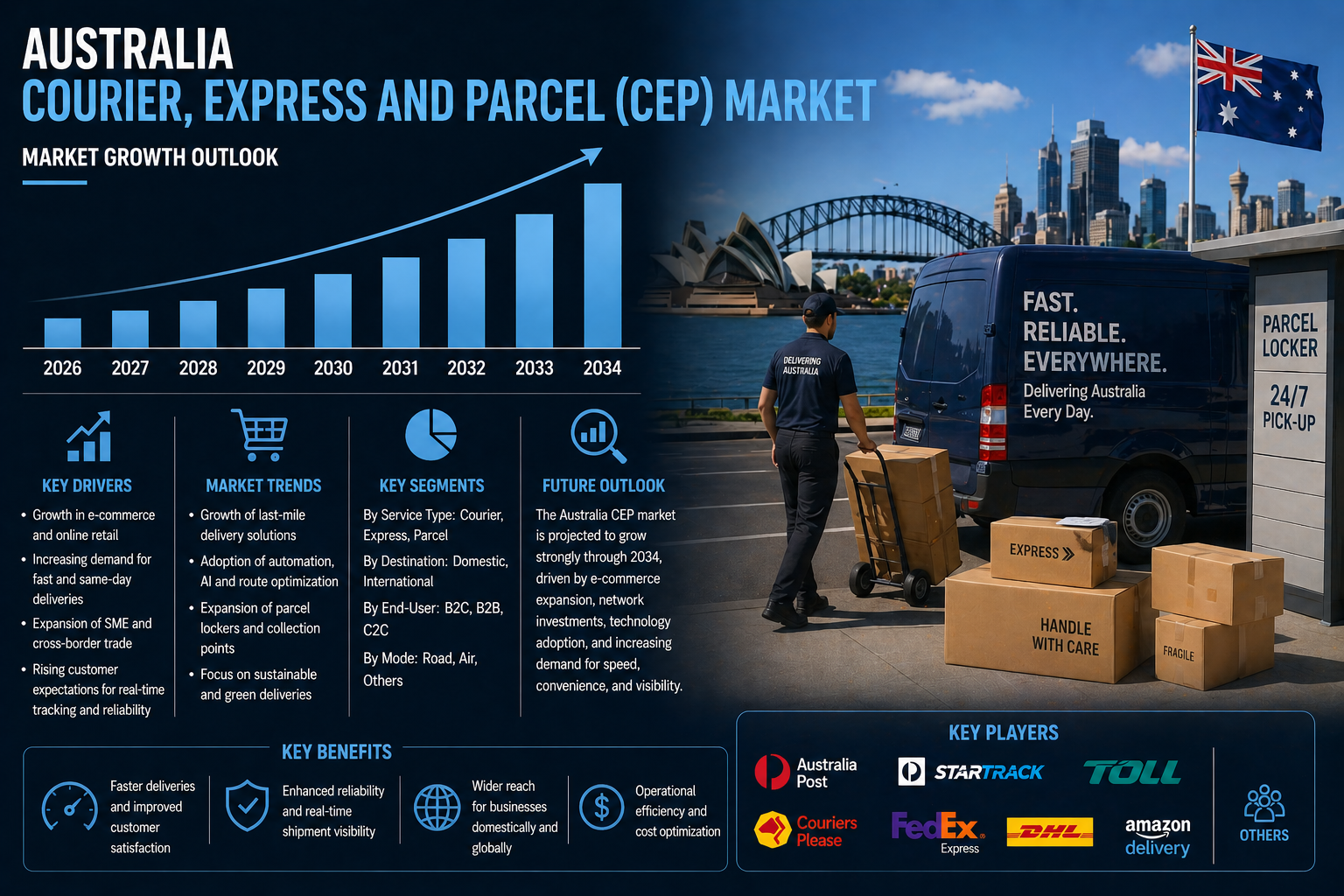
Australia Courier, Express and Parcel (CEP) Market
Australia courier, express and parcel market size reached USD 13.2 Billion in 2025, the market to reach USD 17.8 Billion by 2034, CAGR of 3.26% during 2026-34.
AUSTRALIA, May 11, 2026 /EINPresswire.com/ -- 𝗔𝘂𝘀𝘁𝗿𝗮𝗹𝗶𝗮 𝗖𝗼𝘂𝗿𝗶𝗲𝗿, 𝗘𝘅𝗽𝗿𝗲𝘀𝘀 𝗮𝗻𝗱 𝗣𝗮𝗿𝗰𝗲𝗹 (𝗖𝗘𝗣) 𝗠𝗮𝗿𝗸𝗲𝘁 𝗢𝘃𝗲𝗿𝘃𝗶𝗲𝘄:Australia courier, express and parcel market size reached USD 13.2 Billion in 2025. Looking forward, IMARC Group expects the market to reach USD 17.8 Billion by 2034, exhibiting a growth rate (CAGR) of 3.26% during 2026-2034. The market is being driven by the explosive growth of e-commerce, rising consumer expectations for faster and more flexible delivery options, and significant infrastructure investments by major logistics operators. Australians spent a total of $82.6 billion online in 2025 — up 14% year-on-year — with 24% of all retail spend now happening digitally, generating unprecedented parcel volumes that are reshaping the logistics landscape. With Australia Post processing over 110.7 million parcels during the 2025 peak season alone and investing $320 million in a new parcel super hub, the market is entering a phase of accelerated automation, capacity expansion, and technology-driven transformation.
𝗪𝗵𝘆 𝗶𝘀 𝗛𝗼𝘁 𝗧𝗼𝗱𝗮𝘆 𝗔𝘂𝘀𝘁𝗿𝗮𝗹𝗶𝗮 𝗖𝗼𝘂𝗿𝗶𝗲𝗿, 𝗘𝘅𝗽𝗿𝗲𝘀𝘀 𝗮𝗻𝗱 𝗣𝗮𝗿𝗰𝗲𝗹 (𝗖𝗘𝗣) 𝗠𝗮𝗿𝗸𝗲𝘁?
Australia Post announced a $320 million investment in a parcel super hub expected to open in late 2026, capable of processing up to 400,000 parcels daily with 70% automation; Australians spent $82.6 billion online in 2025, up 14% year-on-year, with peak season delivering 110.7 million parcels through Australia Post alone — up 7.6% year-on-year; Sendle, a prominent Australian courier startup, abruptly shut down operations on January 11, 2026, disrupting thousands of SME shippers and reshaping competitive dynamics; Wing (Alphabet) continues expanding drone delivery operations in Logan, Queensland, with hundreds of thousands of completed deliveries; and DHL completed a new 16,600m² warehouse and office facility in Australia in mid-2025, expanding its transport sector capacity.
𝗔𝘂𝘀𝘁𝗿𝗮𝗹𝗶𝗮 𝗖𝗼𝘂𝗿𝗶𝗲𝗿, 𝗘𝘅𝗽𝗿𝗲𝘀𝘀 𝗮𝗻𝗱 𝗣𝗮𝗿𝗰𝗲𝗹 (𝗖𝗘𝗣) 𝗠𝗮𝗿𝗸𝗲𝘁 Summary:
E-commerce shipments are accounting for approximately 35.78% of total CEP volumes and maintaining the fastest growth trajectory within the Australia courier, express, parcel market, driven by Australians spending $82.6 billion online in 2025 — a 14% year-on-year increase — with online retail now representing approximately 24% of all retail expenditure, generating massive and structurally growing parcel volumes that are fundamentally reshaping logistics infrastructure requirements.
Australia Post remains the dominant operator in Australia's CEP landscape, processing over 110.7 million parcels during the 2025 peak season — up 7.6% year-on-year — and reporting USD 3.36 billion in revenue for the first half of 2025, while investing $320 million in a new parcel super hub capable of processing up to 400,000 parcels daily with 70% automation, alongside a AUD 75.8 million air parcel facility at Brisbane Airport designed to handle 176,000 parcels daily by early 2026.
The domestic parcel segment accounts for approximately 62.90% of the Australian CEP market, reflecting the dominance of intra-country e-commerce and business logistics flows, while international volumes are growing at a faster rate driven by expanding cross-border e-commerce, global marketplace platforms like Amazon and Temu, and the increasing integration of Australian retailers into Asia-Pacific and global supply chain networks.
The competitive landscape is undergoing significant disruption following Sendle's abrupt shutdown on January 11, 2026, which stranded thousands of SME shippers and exposed the fragility of startup-driven logistics models — redirecting parcel volumes toward established operators including Australia Post, CouriersPlease, and Aramex while strengthening the competitive positioning of asset-heavy carriers with national delivery networks and proven operational resilience.
Global integrators including DHL, FedEx, and UPS are intensifying their presence in Australia's express and international parcel segments, gaining market share as Australia Post's dominance slips below 35% in international express — with DHL completing a new 16,600m² warehouse and office facility in mid-2025 and all three integrators leveraging their global networks to capture growing cross-border e-commerce volumes between Australia and key trading partners across Asia, Europe, and North America.
Consumer demand for faster and more flexible delivery options is driving significant investment in last-mile innovation, with parcel locker deliveries jumping 18% during the 2025 peak season and operators expanding same-day delivery coverage, click-and-collect networks, and out-of-home collection points — reflecting a structural shift in Australian consumer preferences toward convenience-driven fulfillment solutions that reduce failed delivery attempts and improve customer satisfaction.
The C2C (customer-to-customer) segment is registering the fastest expansion within the Australian CEP market, fueled by the growth of peer-to-peer marketplace platforms, resale economy trends, and social commerce — challenging the established dominance of B2C logistics flows and creating new demand for affordable, user-friendly shipping solutions tailored to individual sellers, small-scale merchants, and casual online traders.
Infrastructure investment across the Australian CEP sector is accelerating, with over AUD 500 million committed to new sorting hubs, automated processing facilities, and regional distribution centers — led by Australia Post's $320 million parcel super hub and Brisbane Airport facility — as operators race to build the capacity needed to handle projected parcel volume growth driven by continued e-commerce expansion and rising consumer delivery expectations.
𝗛𝗼𝘄 𝗔𝗜 𝗶𝘀 𝗥𝗲𝘀𝗵𝗮𝗽𝗶𝗻𝗴 𝘁𝗵𝗲 𝗔𝘂𝘀𝘁𝗿𝗮𝗹𝗶𝗮 𝗖𝗼𝘂𝗿𝗶𝗲𝗿, 𝗘𝘅𝗽𝗿𝗲𝘀𝘀 𝗮𝗻𝗱 𝗣𝗮𝗿𝗰𝗲𝗹 (𝗖𝗘𝗣) 𝗠𝗮𝗿𝗸𝗲𝘁:
Artificial intelligence is rapidly emerging as a transformative force across the Australia courier, express and parcel market, fundamentally reshaping how parcels are sorted, routed, delivered, and tracked — delivering a new generation of operational efficiency, cost reduction, and customer experience enhancement that is critical to sustaining competitiveness as e-commerce volumes continue to surge and consumer expectations for speed and flexibility intensify throughout the forecast period.
𝗔𝘂𝘁𝗼𝗻𝗼𝗺𝗼𝘂𝘀 𝗗𝗿𝗼𝗻𝗲 𝗮𝗻𝗱 𝗥𝗼𝗯𝗼𝘁𝗶𝗰 𝗗𝗲𝗹𝗶𝘃𝗲𝗿𝘆 𝗦𝘆𝘀𝘁𝗲𝗺𝘀: AI-powered autonomous delivery platforms are advancing rapidly in Australia, with Wing (Alphabet subsidiary) operating drone delivery services in Logan, Queensland, completing hundreds of thousands of deliveries, and Charles Darwin University achieving an Australian-first in November 2025 by delivering essential medication via drone to a remote community in West Arnhem — demonstrating the potential for AI-guided aerial delivery to solve last-mile challenges across Australia's remote and regional areas while reducing delivery emissions by up to 71% compared to traditional truck delivery.
𝗔𝗜-𝗗𝗿𝗶𝘃𝗲𝗻 𝗪𝗮𝗿𝗲𝗵𝗼𝘂𝘀𝗲 𝗔𝘂𝘁𝗼𝗺𝗮𝘁𝗶𝗼𝗻 𝗮𝗻𝗱 𝗦𝗼𝗿𝘁𝗶𝗻𝗴 𝗦𝘆𝘀𝘁𝗲𝗺𝘀: AI-integrated automated sorting systems and robotic warehouse handling technologies are being deployed across Australia's major parcel processing hubs — exemplified by Australia Post's $320 million parcel super hub targeting 70% operational automation and capacity to process up to 400,000 parcels daily — using computer vision, machine learning-powered barcode reading, and intelligent conveyor routing to dramatically accelerate parcel throughput, reduce manual handling errors, and enable 24/7 processing capabilities during peak demand periods.
𝗣𝗿𝗲𝗱𝗶𝗰𝘁𝗶𝘃𝗲 𝗗𝗲𝗺𝗮𝗻𝗱 𝗙𝗼𝗿𝗲𝗰𝗮𝘀𝘁𝗶𝗻𝗴 𝗮𝗻𝗱 𝗖𝗮𝗽𝗮𝗰𝗶𝘁𝘆 𝗣𝗹𝗮𝗻𝗻𝗶𝗻𝗴: AI-powered predictive analytics platforms are enabling Australian CEP operators to forecast parcel volumes, anticipate seasonal demand spikes, and optimize fleet deployment and staffing levels — using historical data, e-commerce transaction patterns, promotional calendars, and macroeconomic indicators to ensure operational capacity aligns with actual demand, reducing both overcapacity waste during quiet periods and service failures during peak events like Black Friday and the Christmas shopping season.
𝗥𝗲𝗾𝘂𝗲𝘀𝘁 𝗳𝗼𝗿 𝗮 𝘀𝗮𝗺𝗽𝗹𝗲 𝗿𝗲𝗽𝗼𝗿𝘁 𝗣𝗗𝗙: https://www.imarcgroup.com/australia-courier-express-parcel-market/requestsample
𝗠𝗮𝗿𝗸𝗲𝘁 𝗧𝗿𝗲𝗻𝗱𝘀 𝗮𝗻𝗱 𝗜𝗻𝘀𝗶𝗴𝗵𝘁𝘀:
The explosive growth of Australian e-commerce — with consumers spending $82.6 billion online in 2025, up 14% year-on-year, and online retail now accounting for approximately 24% of total retail expenditure — is acting as the primary structural demand driver for the CEP market, generating sustained and accelerating parcel volume growth that is compelling operators to invest heavily in sorting infrastructure, fleet expansion, and last-mile delivery innovation to keep pace with consumer expectations for speed, convenience, and reliability.
Last-mile delivery innovation is intensifying across the Australian CEP market, with parcel locker deliveries surging 18% during the 2025 peak season and operators expanding same-day delivery coverage, click-and-collect partnerships, and out-of-home collection networks — reflecting a fundamental consumer preference shift away from traditional doorstep delivery toward flexible, self-service fulfillment options that reduce failed delivery attempts and align with the rising share of apartment-dwelling urban Australians who require secure, accessible parcel collection solutions.
The competitive landscape of Australia's CEP market is undergoing significant structural change, with the abrupt shutdown of Sendle in January 2026 displacing thousands of SME shippers and redistributing volumes toward established carriers, while global integrators including DHL, FedEx, and UPS continue gaining share in international express — collectively pushing Australia Post's dominance below 35% in cross-border segments and accelerating a broader shift toward a more fragmented, multi-carrier competitive environment.
Cross-border e-commerce is emerging as a high-growth segment within Australia's CEP market, driven by the expansion of global marketplace platforms like Amazon and Temu, the rising integration of Australian SME retailers into Asia-Pacific supply chain networks, and growing consumer appetite for international online shopping — with international parcel volumes growing faster than domestic volumes and creating significant commercial opportunities for operators with strong global network capabilities and customs clearance infrastructure.
Infrastructure investment across Australia's CEP sector is reaching unprecedented levels, with Australia Post committing over AUD 500 million to new processing capacity — including the $320 million parcel super hub designed to handle 400,000 parcels daily with 70% automation and the AUD 75.8 million Brisbane Airport air parcel facility targeting 176,000 daily parcels — while DHL, Toll Group, and other major operators are simultaneously expanding warehouse, sorting, and distribution capacity to support projected volume growth through the forecast period.
𝗠𝗮𝗿𝗸𝗲𝘁 𝗚𝗿𝗼𝘄𝘁𝗵 𝗗𝗿𝗶𝘃𝗲𝗿𝘀:
𝗘-𝗖𝗼𝗺𝗺𝗲𝗿𝗰𝗲 𝗘𝘅𝗽𝗮𝗻𝘀𝗶𝗼𝗻, 𝗖𝗼𝗻𝘀𝘂𝗺𝗲𝗿 𝗗𝗲𝗹𝗶𝘃𝗲𝗿𝘆 𝗘𝘅𝗽𝗲𝗰𝘁𝗮𝘁𝗶𝗼𝗻𝘀, 𝗮𝗻𝗱 𝗟𝗮𝘀𝘁-𝗠𝗶𝗹𝗲 𝗜𝗻𝗻𝗼𝘃𝗮𝘁𝗶𝗼𝗻
Australia's CEP market is primarily driven by the sustained expansion of e-commerce, with Australians spending $82.6 billion online in 2025 — up 14% year-on-year — and online retail now representing 24% of total retail expenditure. This structural shift is generating massive parcel volumes, with Australia Post processing 110.7 million parcels during the peak season alone. Consumer expectations are simultaneously intensifying, with demand for same-day delivery, parcel locker access (up 18% in 2025), and flexible rerouting options pushing operators to invest in last-mile innovation. The C2C segment is registering the fastest growth, driven by peer-to-peer marketplaces and the resale economy. Together, e-commerce volume growth and evolving consumer delivery preferences are establishing a powerful and self-reinforcing structural demand foundation for the Australian CEP market.
𝗜𝗻𝗳𝗿𝗮𝘀𝘁𝗿𝘂𝗰𝘁𝘂𝗿𝗲 𝗜𝗻𝘃𝗲𝘀𝘁𝗺𝗲𝗻𝘁, 𝗔𝘂𝘁𝗼𝗺𝗮𝘁𝗶𝗼𝗻, 𝗮𝗻𝗱 𝗧𝗲𝗰𝗵𝗻𝗼𝗹𝗼𝗴𝘆 𝗔𝗱𝗼𝗽𝘁𝗶𝗼𝗻
The Australian CEP sector is undergoing a capital-intensive transformation, with operators committing billions to new processing capacity, automated sorting hubs, and technology-driven operational efficiency. Australia Post's $320 million parcel super hub — targeting 70% automation and 400,000 daily parcel capacity — represents the scale of investment underway, complemented by the AUD 75.8 million Brisbane Airport facility and DHL's new 16,600m² logistics complex. AI-powered route optimization, predictive demand forecasting, and automated warehouse systems are reducing operational costs while improving speed and accuracy. Drone delivery is advancing through Wing's operations in Queensland and the landmark CDU medical drone delivery in the Northern Territory. This convergence of infrastructure expansion and technology adoption is building the operational backbone needed to handle projected volume growth while maintaining service quality and cost competitiveness.
𝗖𝗼𝗺𝗽𝗲𝘁𝗶𝘁𝗶𝘃𝗲 𝗥𝗲𝘀𝘁𝗿𝘂𝗰𝘁𝘂𝗿𝗶𝗻𝗴, 𝗖𝗿𝗼𝘀𝘀-𝗕𝗼𝗿𝗱𝗲𝗿 𝗚𝗿𝗼𝘄𝘁𝗵, 𝗮𝗻𝗱 𝗦𝘂𝘀𝘁𝗮𝗶𝗻𝗮𝗯𝗶𝗹𝗶𝘁𝘆 𝗧𝗿𝗮𝗻𝘀𝗶𝘁𝗶𝗼𝗻
Australia's CEP market is being reshaped by significant competitive restructuring, with Sendle's abrupt shutdown in January 2026 displacing SME volumes toward established carriers, while global integrators — DHL, FedEx, and UPS — continue capturing share in international express. Cross-border e-commerce is emerging as a high-growth corridor, driven by Amazon, Temu, and Asia-Pacific marketplace expansion. The sustainability transition is adding a third growth dimension, with operators electrifying delivery fleets, scaling drone operations, and adopting green logistics practices in response to corporate ESG mandates and consumer demand for environmentally responsible shipping. Together, competitive consolidation, international volume growth, and the sustainability imperative are creating a multi-layered growth environment that supports continued market expansion and rewards operators who combine network scale, technological capability, and environmental responsibility.
𝗠𝗮𝗿𝗸𝗲𝘁 𝗦𝗲𝗴𝗺𝗲𝗻𝘁𝗮𝘁𝗶𝗼𝗻:
IMARC Group's research categorizes the Australia courier, express and parcel (CEP) market as follows:
𝗕𝘆 𝗦𝗲𝗿𝘃𝗶𝗰𝗲 𝗧𝘆𝗽𝗲:
B2B (Business-to-Business)
B2C (Business-to-Consumer)
C2C (Customer-to-Customer)
𝗕𝘆 𝗗𝗲𝘀𝘁𝗶𝗻𝗮𝘁𝗶𝗼𝗻:
Domestic
International
𝗕𝘆 𝗧𝘆𝗽𝗲:
Air
Ship
Subway
Road
𝗕𝘆 𝗘𝗻𝗱 𝗨𝘀𝗲 𝗦𝗲𝗰𝘁𝗼𝗿:
Services (BFSI — Banking, Financial Services and Insurance)
Wholesale and Retail Trade (E-commerce)
Manufacturing, Construction and Utilities
Others
𝗕𝘆 𝗥𝗲𝗴𝗶𝗼𝗻:
Australia Capital Territory & New South Wales
Victoria & Tasmania
Queensland
Northern Territory & Southern Australia
Western Australia
𝗞𝗲𝘆 𝗣𝗹𝗮𝘆𝗲𝗿𝘀:
The competitive landscape of the Australia courier, express and parcel (CEP) market includes a comprehensive analysis of key player positioning, market structure, top winning strategies, competitive dashboards, and company evaluation quadrants. Some of the key players operating in the market include Australia Post (StarTrack), DHL Express, FedEx Express, Toll Group, CouriersPlease, Aramex, Amazon Logistics, Team Global Express, and UPS. Detailed profiles of all major companies are provided within the full IMARC Group research report.
𝗥𝗲𝗰𝗲𝗻𝘁 𝗡𝗲𝘄𝘀 𝗮𝗻𝗱 𝗗𝗲𝘃𝗲𝗹𝗼𝗽𝗺𝗲𝗻𝘁𝘀:
𝗝𝗮𝗻𝘂𝗮𝗿𝘆 𝟮𝟬𝟮𝟲: Sendle, a prominent Australian courier startup specializing in SME parcel delivery, abruptly halted all parcel pickups and deliveries on January 11, 2026. The shutdown followed serious financial difficulties within the FAST Group — formed through Sendle's three-way merger with US companies ACI Logistix and FirstMile — stranding thousands of small business shippers and triggering a significant redistribution of parcel volumes toward established carriers including Australia Post, CouriersPlease, and Aramex.
𝗟𝗮𝘁𝗲 𝟮𝟬𝟮𝟲 (𝗘𝘅𝗽𝗲𝗰𝘁𝗲𝗱): Australia Post is investing $320 million in a parcel super hub expected to open in late 2026, featuring high-tech automation capable of processing up to 400,000 parcels daily with 70% of operations automated. The 83,000m² facility is designed to cut regional delivery times by 30% and process up to 21,000 parcels per day during peak season, representing one of the largest logistics infrastructure investments in Australian history.
𝗘𝗮𝗿𝗹𝘆 𝟮𝟬𝟮𝟲: Australia Post's AUD 75.8 million air parcel facility at Brisbane Airport became operational, designed to process 176,000 parcels daily — the first facility to fully combine the operations of Australia Post and StarTrack under one roof, improving air freight processing efficiency for Queensland and northern Australia.
𝗠𝗶𝗱 𝟮𝟬𝟮𝟱: DHL completed a new 16,600m² warehouse and office facility in Australia, expanding its transport sector capacity and strengthening its competitive position in the premium express and international logistics segments of the Australian market.
𝗡𝗼𝘃𝗲𝗺𝗯𝗲𝗿 𝟮𝟬𝟮𝟱: In an Australian-first, Charles Darwin University's North Australia Centre for Autonomous Systems successfully delivered essential medication via drone to a remote community in West Arnhem, Northern Territory — with regulatory approval from the Civil Aviation Safety Authority for beyond-visual-line-of-sight operations, demonstrating the potential for drone delivery to address last-mile logistics challenges in remote Australia.
𝟮𝟬𝟮𝟱: Wing, a subsidiary of Alphabet Inc., continued scaling its drone delivery service in Logan, Queensland, completing hundreds of thousands of deliveries to suburban customers from local retailers — establishing Australia as one of the world's leading markets for commercial drone delivery and attracting growing interest from retailers and logistics operators seeking to integrate aerial delivery into their last-mile networks.
𝗡𝗼𝘁𝗲: 𝗜𝗳 𝘆𝗼𝘂 𝗿𝗲𝗾𝘂𝗶𝗿𝗲 𝗮𝗻𝘆 𝘀𝗽𝗲𝗰𝗶𝗳𝗶𝗰 𝗶𝗻𝗳𝗼𝗿𝗺𝗮𝘁𝗶𝗼𝗻 𝘁𝗵𝗮𝘁 𝗶𝘀 𝗻𝗼𝘁 𝗰𝗼𝘃𝗲𝗿𝗲𝗱 𝗰𝘂𝗿𝗿𝗲𝗻𝘁𝗹𝘆 𝘄𝗶𝘁𝗵𝗶𝗻 𝘁𝗵𝗲 𝘀𝗰𝗼𝗽𝗲 𝗼𝗳 𝘁𝗵𝗲 𝗿𝗲𝗽𝗼𝗿𝘁, 𝘄𝗲 𝘄𝗶𝗹𝗹 𝗽𝗿𝗼𝘃𝗶𝗱𝗲 𝘁𝗵𝗲 𝘀𝗮𝗺𝗲 𝗮𝘀 𝗮 𝗽𝗮𝗿𝘁 𝗼𝗳 𝘁𝗵𝗲 𝗰𝘂𝘀𝘁𝗼𝗺𝗶𝘇𝗮𝘁𝗶𝗼𝗻.
𝗕𝗿𝗼𝘄𝘀𝗲 𝘁𝗵𝗲 𝗳𝘂𝗹𝗹 𝗿𝗲𝗽𝗼𝗿𝘁 𝘄𝗶𝘁𝗵 𝗧𝗢𝗖 𝗮𝗻𝗱 𝗹𝗶𝘀𝘁 𝗼𝗳 𝗳𝗶𝗴𝘂𝗿𝗲𝘀: https://www.imarcgroup.com/australia-courier-express-parcel-market
Other Report by IMARC Group:
Australia Waste Management Market 2026: https://www.imarcgroup.com/australia-waste-management-market
Australia Used Car Market 2026: https://www.imarcgroup.com/australia-used-car-market
Australia Freight and Logistics Market 2026: https://www.imarcgroup.com/australia-freight-logistics-market
Australia Travel Insurance Market 2026: https://www.imarcgroup.com/australia-travel-insurance-market
Australia Ground Support Equipment Market 2026: https://www.imarcgroup.com/australia-ground-support-equipment-market
Elena Anderson
IMARC Services Private Limited
+ +1 201-971-6302
email us here
Legal Disclaimer:
EIN Presswire provides this news content "as is" without warranty of any kind. We do not accept any responsibility or liability for the accuracy, content, images, videos, licenses, completeness, legality, or reliability of the information contained in this article. If you have any complaints or copyright issues related to this article, kindly contact the author above.
