

Get your daily news on global issues
Provided by AGP
Ethanol Production Plant Setup, Feasibility Study, ROI Analysis and Business Plan Consultant
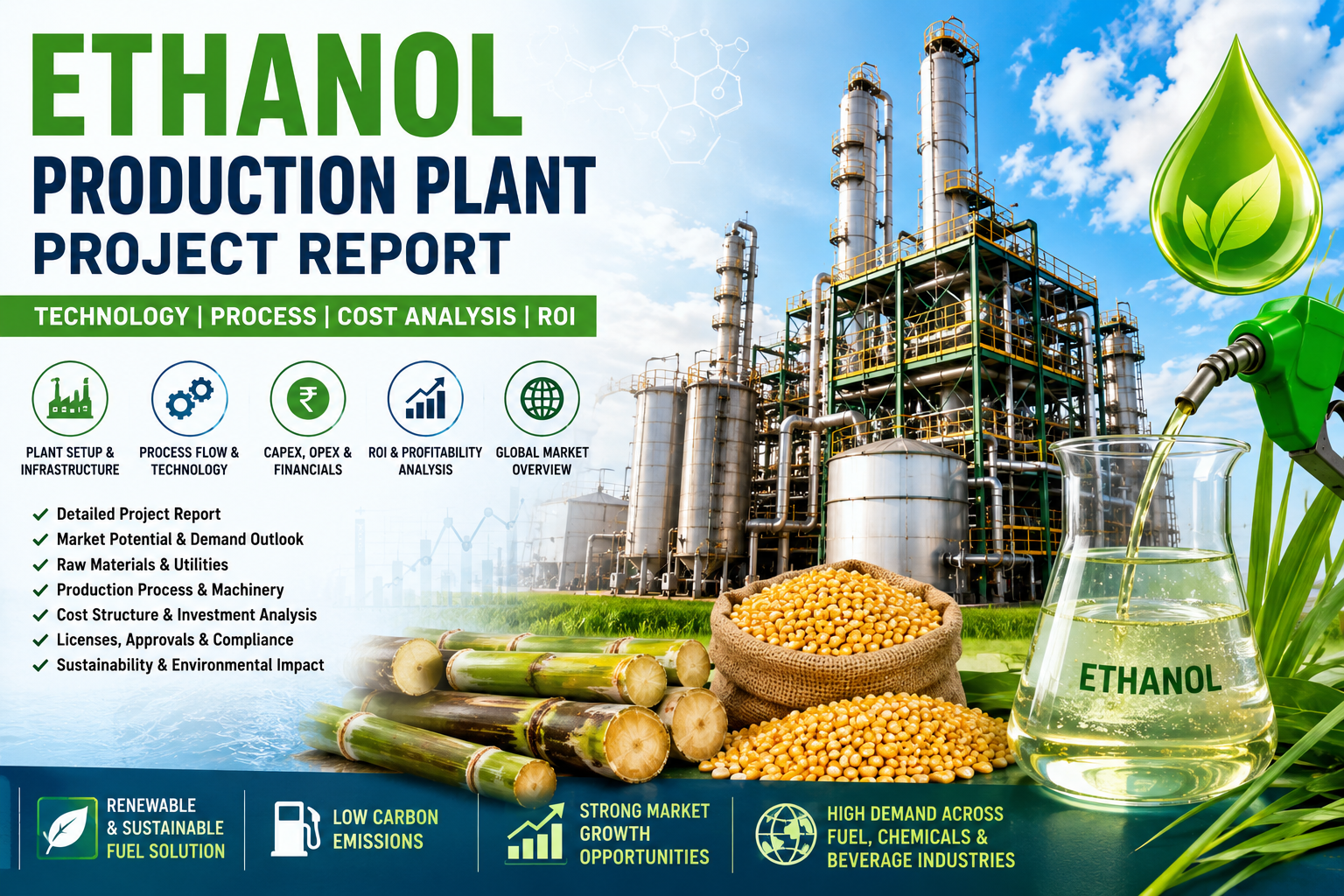
A Detailed DPR Covering CapEx, OpEx, Machinery, ROI Analysis, and the Full India E20-to-E30 Investment Opportunity for Entrepreneurs and Institutional Investors
BROOKLYN, NY, UNITED STATES, May 19, 2026 /EINPresswire.com/ -- Setting up an ethanol production plant is one of the safest manufacturing investments you can make right now. The demand is locked in through government policy, the off-take is guaranteed by public sector oil companies, and the subsidy support reduces your financing cost significantly. Add to that a growing industrial market for ethanol beyond fuel - pharma, food, cosmetics, chemicals - and you have a product with multiple revenue streams from day one.IMARC Group's Ethanol Production Cost Analysis Report is a complete DPR and ethanol feasibility study built for people who are serious about ethanol production plant setup and getting into this business. It covers everything from land and machinery costs to 10-year financial projections, process design, feedstock sourcing, and regulatory compliance - the kind of detail you need when presenting to a bank, a private investor, or your own management team.
𝐑𝐞𝐪𝐮𝐞𝐬𝐭 𝐟𝐨𝐫 𝐚 𝐒𝐚𝐦𝐩𝐥𝐞 𝐑𝐞𝐩𝐨𝐫𝐭: https://www.imarcgroup.com/ethanol-manufacturing-plant-project-report/requestsample
𝐀 𝐆𝐥𝐨𝐛𝐚𝐥 𝐒𝐡𝐢𝐟𝐭 𝐭𝐨 𝐁𝐥𝐞𝐧𝐝𝐞𝐝 𝐅𝐮𝐞𝐥𝐬 - 𝐀𝐧𝐝 𝐖𝐡𝐚𝐭 𝐈𝐭 𝐌𝐞𝐚𝐧𝐬 𝐟𝐨𝐫 𝐈𝐧𝐯𝐞𝐬𝐭𝐨𝐫𝐬
Governments on every continent have made ethanol blending a policy mandate. The US Renewable Fuel Standard requires renewable fuel blending into all transportation fuel. Brazil runs its entire road transport system on E27 under RenovaBio. The EU Renewable Energy Directive mandates 14.5% renewable content in transport fuel by 2030. Indonesia, Vietnam, and Thailand are rolling out E5 to E15 programmes. Every one of these policies creates a guaranteed, growing market for ethanol production investment. Among all these markets, no country has moved faster or more decisively than India.
India achieved 20% ethanol blending in petrol (E20) in 2025, five years ahead of its original 2030 target, making every petrol retail outlet effectively an E20 ethanol blending plant in the distribution network. Ethanol production in the country has grown from just 38 crore litres in 2014 to over 661 crore litres by mid-2025 - that is a 17x jump in just over a decade. As of April 2026, all petrol sold across India must contain 20% ethanol, and E20 fuel is now dispensed at over 17,400 retail outlets nationwide.
𝐓𝐡𝐞 𝐧𝐮𝐦𝐛𝐞𝐫𝐬 𝐛𝐞𝐡𝐢𝐧𝐝 𝐭𝐡𝐢𝐬 𝐩𝐫𝐨𝐠𝐫𝐚𝐦𝐦𝐞 𝐚𝐫𝐞 𝐬𝐢𝐠𝐧𝐢𝐟𝐢𝐜𝐚𝐧𝐭:
• India saved approximately ₹1.36 lakh crore in foreign exchange by reducing dependence on crude oil imports through ethanol blending
• Farmers and distilleries together received ₹1.96 lakh crore through ethanol procurement payments, transforming agri-processing economies across UP, Maharashtra, Bihar, and Karnataka
• E20 blending has cut an estimated 832 lakh metric tonnes of CO₂ emissions - directly supporting India's net-zero commitments
• Ethanol blending rose from just 1.5% in 2014 to 20% in 2025 - nearly a 13-fold increase in 11 years
India's current production capacity stands at around 18.22 billion litres per year - already above the 11 billion litres needed to sustain E20. The government is now working on the next phase: E30 blending by 2028-2030, with a longer-term push toward E100 through flex-fuel vehicles. Indian Oil Corporation has commissioned India's first commercial 2G ethanol plant in Panipat at 100 KL per day, using crop residue as feedstock. This deployment has established a real-world benchmark for 2G ethanol plant cost in India, making the second-generation route commercially proven, not just theoretical.
For any entrepreneur or investor doing an ethanol manufacturing plant cost analysis for India, the policy environment makes this one of the most policy-backed green fuel manufacturing investments globally, with a very different risk profile compared to most other manufacturing sectors.
𝐏𝐨𝐥𝐢𝐜𝐲 𝐒𝐮𝐩𝐩𝐨𝐫𝐭 𝐚𝐧𝐝 𝐈𝐧𝐯𝐞𝐬𝐭𝐦𝐞𝐧𝐭 𝐈𝐧𝐜𝐞𝐧𝐭𝐢𝐯𝐞𝐬
Every major ethanol market has structured government support that de-risks plant investment. The form varies by country, but the intent is the same: reduce the cost of entry and guarantee a buyer for what you produce.
• 𝐔𝐧𝐢𝐭𝐞𝐝 𝐒𝐭𝐚𝐭𝐞𝐬: Renewable Fuel Standard compliance credits create guaranteed demand. The Inflation Reduction Act provides tax credits for biofuel infrastructure and second-generation ethanol facilities
• 𝐁𝐫𝐚𝐳𝐢𝐥: RenovaBio programme guarantees offtake at contracted prices through fuel distributors. Every litre of sugarcane ethanol has a committed buyer before the plant is built
• 𝐄𝐮𝐫𝐨𝐩𝐞𝐚𝐧 𝐔𝐧𝐢𝐨𝐧: RED III compliance creates certified biofuel demand that fuel suppliers must meet by 2030. Import demand from Europe is growing as domestic supply falls short of mandated volumes
𝐈𝐧𝐝𝐢𝐚 𝐨𝐟𝐟𝐞𝐫𝐬 𝐭𝐡𝐞 𝐦𝐨𝐬𝐭 𝐜𝐨𝐦𝐩𝐫𝐞𝐡𝐞𝐧𝐬𝐢𝐯𝐞 𝐩𝐚𝐜𝐤𝐚𝐠𝐞 𝐨𝐟 𝐚𝐧𝐲 𝐦𝐚𝐫𝐤𝐞𝐭:
• 6% interest subvention on loans for new distilleries and grain-based ethanol plants
• GST reduced from 18% to 5% on ethanol supplied for fuel blending
• Long-term offtake agreements (LTOAs) signed by IOC, BPCL, and HPCL - you know your buyer and the price before the plant is even built
• Viability gap funding for 2G ethanol bio-refineries using agricultural waste, bamboo, and crop stubble
• Priority sector lending classification, giving banks a strong incentive to fund these projects
• Excise duty waivers at the state level in UP, Maharashtra, and Gujarat
A 6% interest subsidy over a 10-year loan on a ₹50-100 crore project saves several crore rupees in financing cost alone. Combined with guaranteed off-take from OMCs, the payback period for a well-located ethanol plant typically falls between 5 to 8 years.
𝐄𝐭𝐡𝐚𝐧𝐨𝐥 𝐏𝐫𝐨𝐝𝐮𝐜𝐭𝐢𝐨𝐧 𝐏𝐥𝐚𝐧𝐭 𝐅𝐞𝐚𝐬𝐢𝐛𝐢𝐥𝐢𝐭𝐲 𝐑𝐞𝐩𝐨𝐫𝐭: https://www.imarcgroup.com/ethanol-manufacturing-plant-project-report
𝐇𝐨𝐰 𝐚𝐧 𝐄𝐭𝐡𝐚𝐧𝐨𝐥 𝐏𝐥𝐚𝐧𝐭 𝐖𝐨𝐫𝐤𝐬 - 𝐓𝐡𝐞 𝐏𝐫𝐨𝐝𝐮𝐜𝐭𝐢𝐨𝐧 𝐏𝐫𝐨𝐜𝐞𝐬𝐬
Understanding each stage is important when evaluating a bioethanol manufacturing plant setup, because every step has its own cost driver and engineering consideration:
• 𝐑𝐚𝐰 𝐦𝐚𝐭𝐞𝐫𝐢𝐚𝐥 𝐬𝐨𝐮𝐫𝐜𝐢𝐧𝐠: The feedstock choice - sugarcane juice, B-heavy molasses for a molasses-based ethanol plant, corn, damaged food grains, or 2G agricultural biomass - determines 70-80% of your operating cost. This decision comes before everything else
• 𝐌𝐢𝐥𝐥𝐢𝐧𝐠 𝐚𝐧𝐝 𝐩𝐫𝐞-𝐭𝐫𝐞𝐚𝐭𝐦𝐞𝐧𝐭: Size reduction, enzymatic hydrolysis for starch-based materials, pH adjustment, and sterilisation before fermentation begins
• 𝐅𝐞𝐫𝐦𝐞𝐧𝐭𝐚𝐭𝐢𝐨𝐧: Yeast converts sugars to ethanol over 48-72 hours. Temperature control and yeast health directly affect yield and therefore revenue per tonne of feedstock
• 𝐃𝐢𝐬𝐭𝐢𝐥𝐥𝐚𝐭𝐢𝐨𝐧: Multi-effect columns in the ethanol distillation plant separate ethanol from water and residues. This stage accounts for 50-60% of total plant energy consumption - a key area for OpEx optimisation
• 𝐃𝐞𝐡𝐲𝐝𝐫𝐚𝐭𝐢𝐨𝐧: Molecular sieve technology brings ethanol purity to 99.9% - the anhydrous grade required for petrol blending
• 𝐃𝐃𝐆𝐒 𝐫𝐞𝐜𝐨𝐯𝐞𝐫𝐲: Dried Distillers Grain with Solubles is a high-protein animal feed worth ₹15,000-20,000 per tonne. For a 100 KL/day plant, DDGS alone can generate ₹8-12 crore annually, meaningfully improving overall ethanol plant ROI and project returns
• 𝐄𝐟𝐟𝐥𝐮𝐞𝐧𝐭 𝐭𝐫𝐞𝐚𝐭𝐦𝐞𝐧𝐭: ZLD (Zero Liquid Discharge) is mandatory in most states. Integrating waste heat recovery from distillation reduces steam consumption and cuts utility bills
𝐏𝐥𝐚𝐧𝐭 𝐈𝐧𝐯𝐞𝐬𝐭𝐦𝐞𝐧𝐭 𝐄𝐜𝐨𝐧𝐨𝐦𝐢𝐜𝐬
𝐏𝐫𝐨𝐝𝐮𝐜𝐭𝐢𝐨𝐧 𝐂𝐚𝐩𝐚𝐜𝐢𝐭𝐲:
• 𝐒𝐭𝐚𝐧𝐝𝐚𝐫𝐝 𝐜𝐨𝐦𝐦𝐞𝐫𝐜𝐢𝐚𝐥-𝐬𝐜𝐚𝐥𝐞 𝐫𝐚𝐧𝐠𝐞: 100,000 - 200,000 KL per annum
• Modular design allows starting at lower capacity and expanding without redesigning the core plant
𝐏𝐫𝐨𝐟𝐢𝐭𝐚𝐛𝐢𝐥𝐢𝐭𝐲 𝐁𝐞𝐧𝐜𝐡𝐦𝐚𝐫𝐤𝐬:
• 𝐆𝐫𝐨𝐬𝐬 𝐩𝐫𝐨𝐟𝐢𝐭 𝐦𝐚𝐫𝐠𝐢𝐧: 20-30% under normal feedstock and product pricing
• 𝐍𝐞𝐭 𝐩𝐫𝐨𝐟𝐢𝐭 𝐦𝐚𝐫𝐠𝐢𝐧: 8-12% after loan repayment, depreciation, and taxes
• 𝐁𝐫𝐞𝐚𝐤-𝐞𝐯𝐞𝐧 𝐜𝐚𝐩𝐚𝐜𝐢𝐭𝐲 𝐮𝐭𝐢𝐥𝐢𝐬𝐚𝐭𝐢𝐨𝐧: typically 60-70% of installed capacity
𝐎𝐩𝐞𝐫𝐚𝐭𝐢𝐧𝐠 𝐂𝐨𝐬𝐭 (𝐎𝐩𝐄𝐱) 𝐁𝐫𝐞𝐚𝐤𝐝𝐨𝐰𝐧:
• 𝐑𝐚𝐰 𝐦𝐚𝐭𝐞𝐫𝐢𝐚𝐥𝐬 (𝐦𝐨𝐥𝐚𝐬𝐬𝐞𝐬 𝐨𝐫 𝐜𝐨𝐫𝐧): 70-80% of total OpEx - feedstock proximity and long-term supply contracts are the first things to lock in before finalising a site
• 𝐔𝐭𝐢𝐥𝐢𝐭𝐢𝐞𝐬 (𝐬𝐭𝐞𝐚𝐦, 𝐩𝐨𝐰𝐞𝐫, 𝐰𝐚𝐭𝐞𝐫): 10-15% of OpEx. Grain-based ethanol uses 8-12 litres of water per litre produced; sugarcane-based uses just 2-3 litres
• Labour, maintenance, and overheads: remaining share
𝐄𝐭𝐡𝐚𝐧𝐨𝐥 𝐏𝐥𝐚𝐧𝐭 𝐂𝐚𝐩𝐢𝐭𝐚𝐥 𝐂𝐨𝐬𝐭 (𝐂𝐚𝐩𝐄𝐱) 𝐂𝐨𝐦𝐩𝐨𝐧𝐞𝐧𝐭𝐬:
• Land acquisition and site development
• Civil construction: distillery building, tanks, effluent treatment infrastructure
• Core process equipment: milling systems, fermenters, distillation columns, molecular sieves, DDGS dryer
• Utilities: boiler, cooling tower, effluent treatment plant, power connection
• Pre-operative costs and initial working capital
𝐒𝐩𝐞𝐚𝐤 𝐭𝐨 𝐀𝐧𝐚𝐥𝐲𝐬𝐭 𝐟𝐨𝐫 𝐂𝐮𝐬𝐭𝐨𝐦𝐢𝐳𝐞𝐝 𝐑𝐞𝐩𝐨𝐫𝐭: https://www.imarcgroup.com/request?type=report&id=7657&flag=C
𝐆𝐥𝐨𝐛𝐚𝐥 𝐌𝐚𝐫𝐤𝐞𝐭 - 𝐖𝐡𝐞𝐫𝐞 𝐭𝐡𝐞 𝐃𝐞𝐦𝐚𝐧𝐝 𝐈𝐬 𝐂𝐨𝐦𝐢𝐧𝐠 𝐅𝐫𝐨𝐦
The global ethanol market, valued at USD 104.80 billion, is projected to reach USD 158.45 billion at a CAGR of 4.5%. This growth is backed by aligned blending policies across the world's biggest economies - each creating a distinct market for plant investment.
𝐔𝐧𝐢𝐭𝐞𝐝 𝐒𝐭𝐚𝐭𝐞𝐬: The Renewable Fuel Standard (RFS) mandates blending of renewable fuels into all transportation fuel sold in the US. The country produces over 15 billion gallons through corn ethanol production annually - the world's largest output. Key producers include ADM, POET LLC, Valero Energy, Green Plains, Koch Industries, and Cargill.
𝐁𝐫𝐚𝐳𝐢𝐥: Brazil currently runs on E27 - 27% ethanol blended in petrol - under its RenovaBio programme. Over 80% of new cars sold in Brazil are flex-fuel capable. Sugarcane ethanol production cost in Brazil sets the global benchmark for low-cost biofuel, and Brazil's model is exactly what India is following on its path toward E30 and beyond.
𝐄𝐮𝐫𝐨𝐩𝐞𝐚𝐧 𝐔𝐧𝐢𝐨𝐧: The EU Renewable Energy Directive (RED III) requires 14.5% of transport fuel from renewable sources by 2030. European domestic supply cannot meet this target, creating steady import demand for bioethanol from India and Southeast Asia.
𝐒𝐨𝐮𝐭𝐡𝐞𝐚𝐬𝐭 𝐀𝐬𝐢𝐚 𝐚𝐧𝐝 𝐀𝐟𝐫𝐢𝐜𝐚: The fastest-emerging markets for new ethanol plant setup. Indonesia, the Philippines, Vietnam, and Thailand are rolling out blending mandates between 5% and 15%. In Africa - Kenya, Tanzania, Ethiopia, South Africa - governments are building local biofuel capacity. Both regions are actively evaluating biofuel plant setup cost and DPR development, seeking expertise from Indian consultants.
𝐈𝐧𝐝𝐢𝐚: Now the world's third-largest ethanol producer, India achieved E20 blending in 2025 and is targeting E30 by 2028-2030. With 18+ billion litres of annual production capacity and OMC-backed offtake for all blending-grade ethanol, India is also an active export source for bioethanol and a growing market for DPR expertise across Southeast Asia and Africa
𝐒𝐢𝐭𝐞 𝐒𝐞𝐥𝐞𝐜𝐭𝐢𝐨𝐧 - 𝐆𝐞𝐭𝐭𝐢𝐧𝐠 𝐭𝐡𝐞 𝐋𝐨𝐜𝐚𝐭𝐢𝐨𝐧 𝐑𝐢𝐠𝐡𝐭
Location decisions for an ethanol production plant setup differ by geography, but three variables matter everywhere: feedstock proximity, water availability, and off-take logistics. Here is how that plays out across key markets:
• 𝐅𝐞𝐞𝐝𝐬𝐭𝐨𝐜𝐤 𝐚𝐜𝐜𝐞𝐬𝐬: Within 100-150 km of supply is the standard target. US facilities locate near corn belt states (Iowa, Illinois, Nebraska). Brazil plants sit within sugarcane clusters in São Paulo and Goiás. In India, sugar mill proximity matters for molasses-based plants in UP and Maharashtra; grain mandis for plants in Punjab and Haryana
• 𝐖𝐚𝐭𝐞𝐫 𝐚𝐜𝐜𝐞𝐬𝐬: Grain-based ethanol uses 8-12 litres of water per litre produced. Sugarcane-based requires just 2-3 litres. Any new plant needs a confirmed water allocation - whether from a state authority in India, a river permit in the US, or a municipal connection in Europe
• 𝐋𝐨𝐠𝐢𝐬𝐭𝐢𝐜𝐬 𝐜𝐨𝐧𝐧𝐞𝐜𝐭𝐢𝐯𝐢𝐭𝐲: In India, road tanker access to OMC blending depots is essential. In the US, pipeline and rail access to fuel distribution terminals. In Brazil, proximity to port infrastructure for E27 distribution. The logistics chain from plant to blending point determines dispatch cost
• 𝐆𝐨𝐯𝐞𝐫𝐧𝐦𝐞𝐧𝐭 𝐢𝐧𝐜𝐞𝐧𝐭𝐢𝐯𝐞𝐬: India offers state-level incentives in UP, Maharashtra, and Gujarat on top of central subsidies. The US has state-level renewable fuel credits. Brazil offers ICMS tax benefits in key producing states. Always map incentives before finalising a site
• 𝐑𝐞𝐠𝐮𝐥𝐚𝐭𝐨𝐫𝐲 𝐜𝐥𝐞𝐚𝐫𝐚𝐧𝐜𝐞𝐬: State Pollution Control Board and PESO certification in India. EPA and state environmental permits in the US. Environmental Impact Assessment under EU directives. Timeline and cost vary significantly by jurisdiction and are part of the feasibility analysis
𝐄𝐭𝐡𝐚𝐧𝐨𝐥 𝐇𝐚𝐬 𝐌𝐨𝐫𝐞 𝐓𝐡𝐚𝐧 𝐎𝐧𝐞 𝐌𝐚𝐫𝐤𝐞𝐭
A well-planned ethanol manufacturing business plan does not rely only on fuel blending. Four other industries provide steady, policy-independent demand:
• 𝐂𝐡𝐞𝐦𝐢𝐜𝐚𝐥𝐬 𝐚𝐧𝐝 𝐢𝐧𝐝𝐮𝐬𝐭𝐫𝐢𝐚𝐥: Solvent for paints, coatings, adhesives, and cleaning products. Key feedstock intermediate for acetic acid, ethyl acetate, and diethyl ether production
• 𝐏𝐡𝐚𝐫𝐦𝐚𝐜𝐞𝐮𝐭𝐢𝐜𝐚𝐥: Disinfectant, antiseptic, and solvent in liquid drug formulations. Demand got a structural boost after COVID-19 and has stayed elevated
• 𝐅𝐨𝐨𝐝 𝐚𝐧𝐝 𝐛𝐞𝐯𝐞𝐫𝐚𝐠𝐞: Fermentation agent, flavour carrier, and solvent for food extracts and colourings. Every large food processing company is a regular buyer
• 𝐂𝐨𝐬𝐦𝐞𝐭𝐢𝐜𝐬 𝐚𝐧𝐝 𝐩𝐞𝐫𝐬𝐨𝐧𝐚𝐥 𝐜𝐚𝐫𝐞: Alcohol base in perfumes, deodorants, sanitisers, and skincare products. India's cosmetics industry is growing at 12-14% per year, pulling consistent demand
Having buyers across four industries gives you pricing power and offtake flexibility that a single-market plant simply does not have.
𝐖𝐡𝐚𝐭 𝐭𝐡𝐞 𝐈𝐌𝐀𝐑𝐂 𝐃𝐏𝐑 𝐂𝐨𝐯𝐞𝐫𝐬
The Ethanol Plant Project Report goes deep on every cost and operational decision you will face. It is built for bank submissions, investor presentations, and engineering planning - not for reading and filing away.
The report includes:
• Full process flow with mass balance and raw material requirement calculations
• CapEx breakdown by component: equipment, civil, utilities, pre-operative costs, contingencies
• 10-year OpEx projections: raw materials, utilities, manpower, maintenance
• Financial model: IRR, NPV, DSCR, break-even, sensitivity analysis
• Machinery specifications with Indian, Chinese, and European sourcing options
• Plant layout and design considerations
• Regulatory compliance checklist for India
• Ethanol project cost analysis: cost benchmarking across molasses, sugarcane, and grain-based production routes
Whether you are a first-time investor evaluating a grain-based ethanol plant in Punjab, a sugar co-operative looking at distillery expansion in Maharashtra, a fund assessing a bioethanol plant investment in Southeast Asia, or a lender that needs a bankable feasibility study for project financing - this report covers every dimension of the decision.
𝐁𝐫𝐨𝐰𝐬𝐞 𝐌𝐨𝐫𝐞 𝐅𝐞𝐚𝐬𝐢𝐛𝐢𝐥𝐢𝐭𝐲 𝐒𝐭𝐮𝐝𝐲 𝐚𝐧𝐝 𝐁𝐮𝐬𝐢𝐧𝐞𝐬𝐬 𝐏𝐥𝐚𝐧 𝐑𝐞𝐩𝐨𝐫𝐭𝐬 𝐛𝐲 𝐈𝐌𝐀𝐑𝐂 𝐆𝐫𝐨𝐮𝐩:
• 𝐁𝐢𝐨𝐦𝐚𝐬𝐬 𝐏𝐞𝐥𝐥𝐞𝐭𝐬 𝐌𝐚𝐧𝐮𝐟𝐚𝐜𝐭𝐮𝐫𝐢𝐧𝐠 𝐏𝐥𝐚𝐧𝐭 𝐏𝐫𝐨𝐣𝐞𝐜𝐭 𝐑𝐞𝐩𝐨𝐫𝐭: https://www.imarcgroup.com/biomass-pellets-manufacturing-plant-project-report
• 𝐂𝐚𝐫𝐛𝐨𝐧 𝐅𝐢𝐛𝐞𝐫 𝐌𝐚𝐧𝐮𝐟𝐚𝐜𝐭𝐮𝐫𝐢𝐧𝐠 𝐏𝐥𝐚𝐧𝐭 𝐏𝐫𝐨𝐣𝐞𝐜𝐭 𝐑𝐞𝐩𝐨𝐫𝐭: https://www.imarcgroup.com/carbon-fiber-manufacturing-plant-project-report
• 𝐖𝐨𝐨𝐝 𝐂𝐡𝐚𝐫𝐜𝐨𝐚𝐥 𝐌𝐚𝐧𝐮𝐟𝐚𝐜𝐭𝐮𝐫𝐢𝐧𝐠 𝐏𝐥𝐚𝐧𝐭 𝐏𝐫𝐨𝐣𝐞𝐜𝐭 𝐑𝐞𝐩𝐨𝐫𝐭: https://www.imarcgroup.com/wood-charcoal-manufacturing-plant-project-report
• 𝐓𝐫𝐚𝐜𝐭𝐨𝐫 𝐌𝐚𝐧𝐮𝐟𝐚𝐜𝐭𝐮𝐫𝐢𝐧𝐠 𝐏𝐥𝐚𝐧𝐭 𝐏𝐫𝐨𝐣𝐞𝐜𝐭 𝐑𝐞𝐩𝐨𝐫𝐭: https://www.imarcgroup.com/tractor-manufacturing-plant-project-report
• 𝐒𝐮𝐠𝐚𝐫 𝐌𝐚𝐧𝐮𝐟𝐚𝐜𝐭𝐮𝐫𝐢𝐧𝐠 𝐏𝐥𝐚𝐧𝐭 𝐏𝐫𝐨𝐣𝐞𝐜𝐭 𝐑𝐞𝐩𝐨𝐫𝐭: https://www.imarcgroup.com/sugar-manufacturing-plant-project-report
• 𝐒𝐮𝐥𝐟𝐮𝐫𝐢𝐜 𝐀𝐜𝐢𝐝 𝐏𝐫𝐨𝐝𝐮𝐜𝐭𝐢𝐨𝐧 𝐏𝐥𝐚𝐧𝐭 𝐏𝐫𝐨𝐣𝐞𝐜𝐭 𝐑𝐞𝐩𝐨𝐫𝐭: https://www.imarcgroup.com/sulfuric-acid-manufacturing-plant-project-report
• 𝐏𝐞𝐜𝐭𝐢𝐧 𝐌𝐚𝐧𝐮𝐟𝐚𝐜𝐭𝐮𝐫𝐢𝐧𝐠 𝐏𝐥𝐚𝐧𝐭 𝐏𝐫𝐨𝐣𝐞𝐜𝐭 𝐑𝐞𝐩𝐨𝐫𝐭: https://www.imarcgroup.com/pectin-manufacturing-plant-project-report
• 𝐏𝐞𝐭 𝐅𝐨𝐨𝐝 𝐌𝐚𝐧𝐮𝐟𝐚𝐜𝐭𝐮𝐫𝐢𝐧𝐠 𝐏𝐥𝐚𝐧𝐭 𝐏𝐫𝐨𝐣𝐞𝐜𝐭 𝐑𝐞𝐩𝐨𝐫𝐭: https://www.imarcgroup.com/pet-food-manufacturing-plant-project-report
• 𝐏𝐥𝐚𝐬𝐭𝐢𝐜 𝐂𝐫𝐚𝐭𝐞𝐬 𝐌𝐚𝐧𝐮𝐟𝐚𝐜𝐭𝐮𝐫𝐢𝐧𝐠 𝐏𝐥𝐚𝐧𝐭 𝐏𝐫𝐨𝐣𝐞𝐜𝐭 𝐑𝐞𝐩𝐨𝐫𝐭: https://www.imarcgroup.com/plastic-crates-manufacturing-plant-project-report
• 𝐏𝐨𝐭𝐚𝐭𝐨 𝐏𝐨𝐰𝐝𝐞𝐫 𝐌𝐚𝐧𝐮𝐟𝐚𝐜𝐭𝐮𝐫𝐢𝐧𝐠 𝐏𝐥𝐚𝐧𝐭 𝐏𝐫𝐨𝐣𝐞𝐜𝐭 𝐑𝐞𝐩𝐨𝐫𝐭: https://www.imarcgroup.com/potato-powder-manufacturing-plant-project-report
𝐀𝐛𝐨𝐮𝐭 𝐈𝐌𝐀𝐑𝐂 𝐆𝐫𝐨𝐮𝐩
IMARC Group is a global market research and management consulting firm operating across 200+ industries. Its plant setup and DPR practice works with investors, project developers, government agencies, and banks across more than 50 countries. IMARC's detailed project reports are used for bank loan documentation, investment committee approvals, and pre-project engineering planning.
Elena Anderson
IMARC Services Private Limited
+1 201-971-6302
email us here
Legal Disclaimer:
EIN Presswire provides this news content "as is" without warranty of any kind. We do not accept any responsibility or liability for the accuracy, content, images, videos, licenses, completeness, legality, or reliability of the information contained in this article. If you have any complaints or copyright issues related to this article, kindly contact the author above.
