

Responding to Tightening Catastrophic Risk Insurance Markets, Matrix Wildfire Deploys ZIp Code Scale Fire Denial
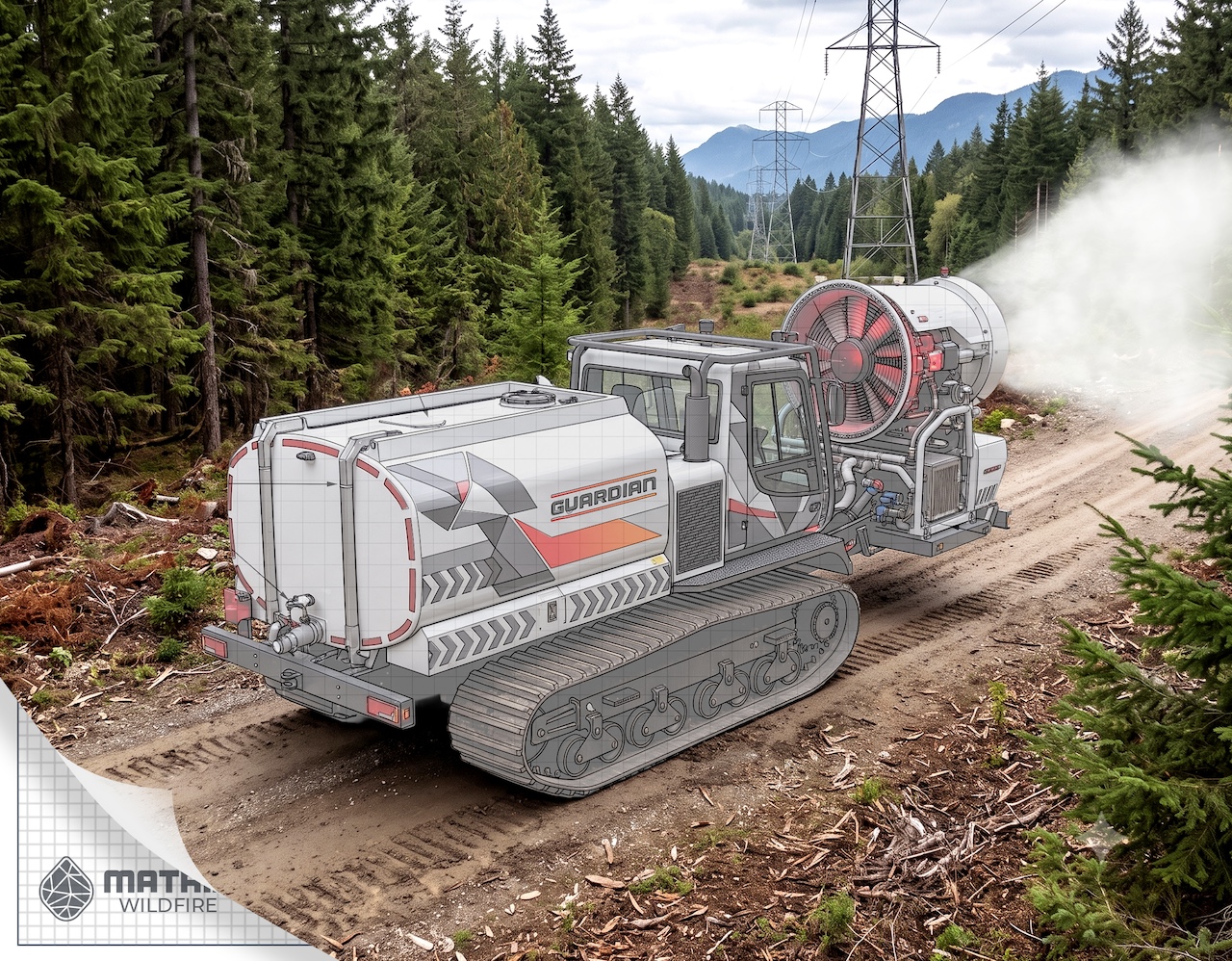
Matrix Wildfire Guardian Transmission Line System
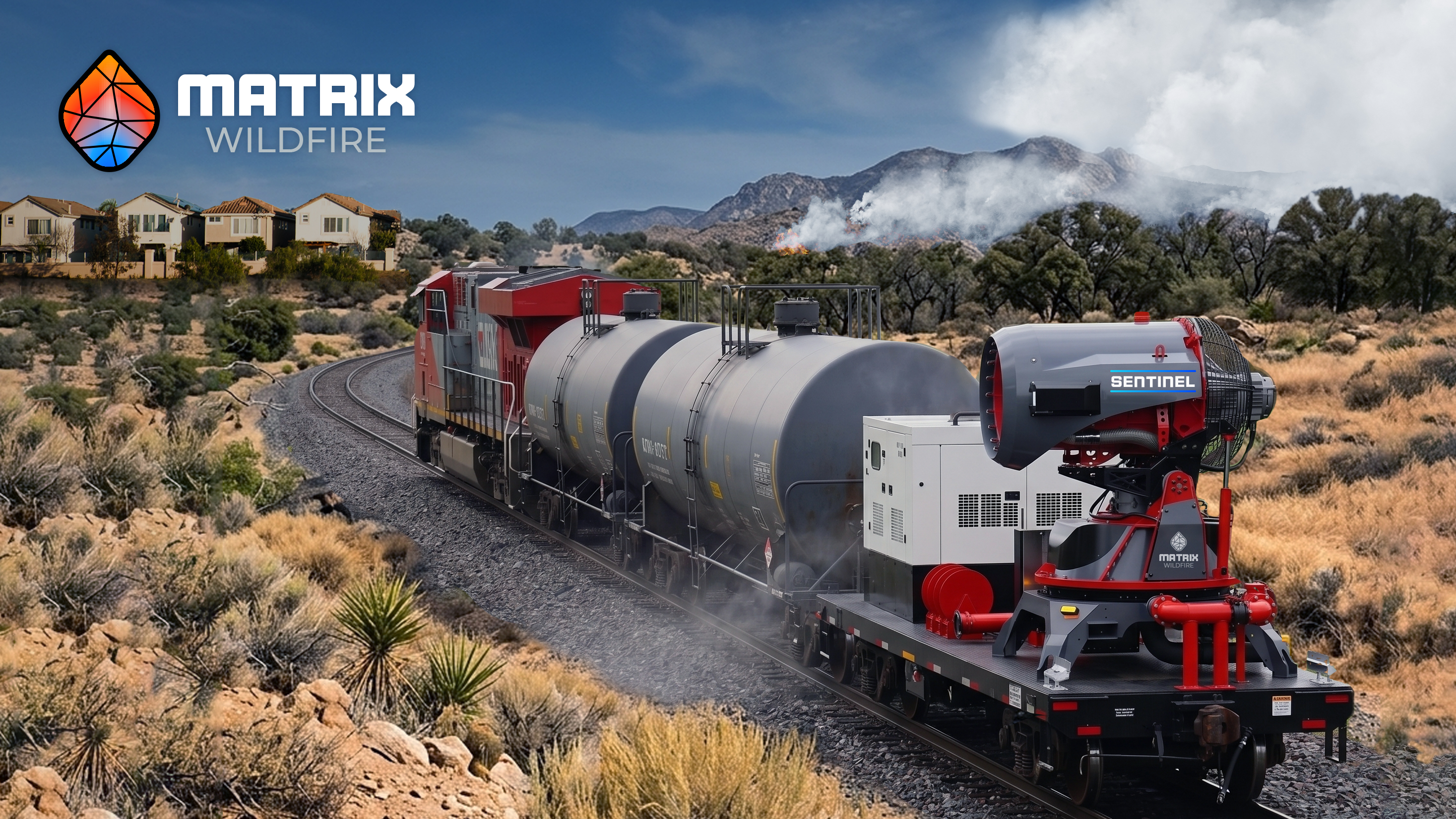
Matrix Wildfire Sentinel Rail System

Matrix Wildfire Massive Area Fire Denial
As carriers pull back from WUI zones, Matrix Wildfire delivers the landscape-scale buffer de-risk data underwriters need to restore property insurability.
As catastrophic wildfire losses trigger unprecedented insurance pullouts, soaring deductibles, and mass non-renewals across the American West, Matrix Wildfire today announced the operational rollout of its Massive Area Fire Denial (MAFD) platform. Engineered to solve the core driver of property uninsurability—the absence of verified, municipal-scale perimeter defense—the platform establishes seasonal, fortified firebreaks capable of neutralizing wind-driven ground fires, ember spotting, and convective crown runs before fire season begins.
For the property and casualty (P&C) insurance and reinsurance sectors, the platform turns unquantifiable catastrophic exposure into an actively managed, defensible risk profile.
The Insurance Crisis: Why Individual Home Hardening Isn't Enough
Over the past five years, standard homeowner and commercial property insurance markets have destabilized across California, Colorado, Oregon, and Washington. Admitted carriers have non-renewed hundreds of thousands of policyholders, driving real estate markets onto overburdened state insurers of last resort.
The crisis stems from the mathematical limitations of relying solely on parcel-by-parcel home hardening. While clearing brush within 100 feet and retrofitting ember-resistant vents are critical, catastrophe modeling algorithms evaluate entire zip codes and Wildland-Urban Interface (WUI) corridors as single, contiguous loss zones. When severe wind-driven conflagrations hit town borders, radiant heat and ember storms overwhelm micro-defenses.
Without verifiable, landscape-level perimeter protection, underwriting models default to blanket policy cancellations.
Reinsurance-Backed Validation: The Power of Community Buffer Zones
Matrix Wildfire’s perimeter-first architecture directly answers groundbreaking research published by Marsh McLennan (Marsh Re), in collaboration with The Nature Conservancy. Examining disaster-impacted zones such as Paradise, California, through commercial catastrophe models, the Marsh McLennan study proved that establishing perimeter wildfire risk-reduction buffers can be as effective at reducing fire losses as updating entire towns to modern fire-resilient building codes.
Crucially, the reinsurance study revealed that combining community-wide buffer strategies with structural hardening reduces Value-at-Risk across standard return periods by up to 42%, converting what would be a 1-in-100-year catastrophic loss event into a substantially rarer 1-in-350-year occurrence.
Matrix Wildfire’s Massive Area Fire Denial (MAFD) operationalizes this exact reinsurance framework at industrial scale.
Transforming Catastrophic Exposure into Measurable Risk Denial
Matrix Wildfire transforms wildfire mitigation into an essential seasonal public utility. Utilizing specialized high-output deployment platforms—including the SENTINEL™ Rail and GUARDIAN™ Utility systems—the company applies durable, rain-resistant, and environmentally safe fire-denial chemistry (formulated in partnership with CitroTech®) along strategic 600+ foot ignition buffers around high-density communities, rail corridors, and energized utility rights-of-way.
This rapid deployment at massive scale approach fortifies hundreds of linear corridor acres in hours rather than months, unlocking distinct operational advantages for insurance and public stakeholders:
Actuarial & Telemetric Audit Trails: The platform pairs physical pre-treatment with IoT-integrated tracking (sub-meter GPS bounds, flow-rate telemetry, and chemical batch verification), providing underwriters with verifiable proof that a municipal border or linear asset has been structurally secured for up to six months.
Suppressing Spotting Embers & Radiant Convection: By breaking fuel continuity and establishing hundreds of feet of non-combustible depth, the buffer suppresses flame lengths and knocks down convective heat flux, dramatically curbing the ember-cast showers that trigger multi-structure ignition cascades.
Unlocking Community-Based Catastrophe Insurance (CBCI): By mathematically suppressing Average Annual Loss (AAL) across entire communities, Matrix Wildfire enables municipalities and risk pools to structure Community-Based Catastrophe Insurance (CBCI) and parametric coverage facilities that capture mitigation credits and restore private carrier appetite.
Relieving State FAIR Plans & Protecting Municipal Tax Bases: Zip-code-level fire denial enables standard admitted carriers to write policies in distressed WUI zones, mitigating insolvency risks for state FAIR plans while preventing the declines in property transactions and tax revenues that accompany insurance flight.
A Utility Model for Fire Defense
"Reinsurance leaders like Marsh McLennan have clearly demonstrated that perimeter buffers fundamentally rewrite the catastrophe loss curve," said Patric Douglas, CEO of Matrix Wildfire. "We do not ask individual property owners to build personal levees to hold back a regional flood, and we cannot expect individual 100-foot garden clearances to hold off a 50,000-acre timber fire. By creating seasonal, data modeled, physical fire denial at the municipal perimeter months before the first spark, we provide the insurance industry with the quantifiable risk-reduction baseline required to keep policies active and capital deployed."
Matrix Wildfire is currently coordinating seasonal pre-mitigation deployments alongside utility providers, regional transportation agencies, and municipal stakeholders ahead of peak fire risk windows.
To learn more about Matrix Wildfire’s Massive Area Fire Denial infrastructure and underwriter partnership programs, visit matrixwildfire.com.
About Matrix Wildfire
Matrix Wildfire develops and deploys industrial-scale, data-integrated Massive Area Fire Denial (MAFD) platforms engineered to safeguard Wildland-Urban Interface (WUI) communities, critical rail corridors, and utility infrastructure. Operating in partnership with advanced chemistry leaders like CitroTech®, Matrix Wildfire transitions fire defense from reactive emergency suppression into proactive, seasonal utility infrastructure.
Media & Underwriter Inquiries:
Christina Hope
Matrix Wildfire Communications
Christina@matrixwildfire.com
matrixwildfire.com
Christina Hope
Matrix Wildfire
+1 4152359410
email us here
Visit us on social media:
LinkedIn
Matrix Guardian System
Legal Disclaimer:
EIN Presswire provides this news content "as is" without warranty of any kind. We do not accept any responsibility or liability for the accuracy, content, images, videos, licenses, completeness, legality, or reliability of the information contained in this article. If you have any complaints or copyright issues related to this article, kindly contact the author above.
