

Top Mobile Gantry Crane Manufacturer Delivers Flexible Lifting Solutions for Industry and Marine Operations
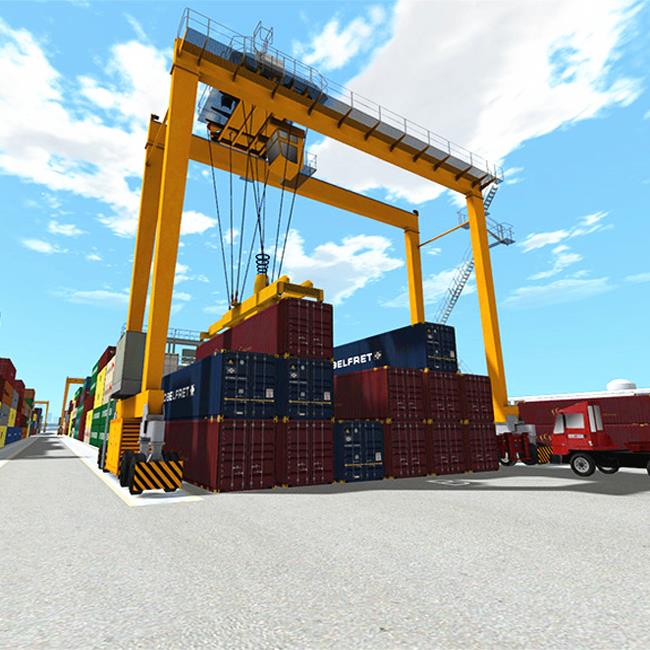
Mobile Gantry Crane
XINXIANG, HENAN, CHINA, October 10, 2026 /EINPresswire.com/ -- As industries seek safer, more flexible, and more efficient ways to move heavy loads, mobile gantry cranes have become an important part of modern material-handling operations. Xinxiang MAGICART Cranes Co., Ltd. serves this market with a portfolio of crane systems and lifting equipment designed for industrial, logistics, port, and shipyard applications. By focusing on practical lifting requirements, equipment flexibility, and project-oriented solutions, the company offers options for businesses that need to handle substantial loads while adapting to changing operational environments. Its range includes mobile gantry cranes and specialized marine lifting systems, supporting applications where mobility, load control, and efficient use of workspace are essential.
The Growing Importance of Mobile Gantry Crane Technology
Manufacturing facilities, warehouses, logistics centers, construction sites, and marine service yards often need to lift and move heavy equipment without relying on a permanent overhead crane installation. In these environments, a mobile gantry crane can provide an adaptable lifting solution. Depending on its configuration, the equipment can travel between designated work areas, support loading and unloading activities, and assist with machinery installation or maintenance.
Compared with fixed lifting systems, mobile gantry cranes may offer greater flexibility when work locations change or when a facility needs to handle different loads in different areas. They can be particularly useful for sites where installing a permanent crane runway would be impractical, costly, or incompatible with the existing layout.
However, mobility alone is not enough to determine whether a crane is suitable for a particular operation. Buyers must also consider rated lifting capacity, lifting height, span, travel surface, operating speed, control methods, and the type of load being handled. Environmental conditions and the frequency of lifting cycles are equally important. A well-matched crane system can help improve workflow, while an unsuitable configuration may create unnecessary delays or operational risks.
For this reason, selecting a mobile gantry crane increasingly involves more than comparing product prices. Businesses must assess the complete application, including the load path, available working space, safety requirements, maintenance arrangements, and expected service life.
MAGICART’s Approach to Crane and Material-Handling Solutions
Xinxiang MAGICART Cranes Co., Ltd. focuses on crane and material-handling equipment, with product categories covering mobile gantry cranes, mobile boat hoists, shipyard cranes, overhead cranes, rail gantry cranes, jib cranes, hydraulic gantry systems, and related lifting components. This product range allows buyers to consider different equipment types according to the demands of their operations.
The company’s official website describes its work as encompassing the development, design, manufacturing, installation, and service of crane and material-handling technology. Its stated emphasis on intelligent lifting equipment and lightweight technology reflects a broader industry direction: equipment should not only lift the required load, but also help users manage work more efficiently and control costs throughout the equipment’s operating life.
In practical terms, a crane project may require careful coordination between the lifting mechanism, supporting structure, drive system, controls, wheels, and load-handling accessories. The most appropriate configuration depends on the task rather than on a single standard specification. Buyers evaluating a solution from MAGICART or another manufacturer should therefore provide detailed operating requirements before confirming a final design.
Mobile Gantry Cranes for Flexible Industrial Operations
Industrial facilities often handle heavy components that must be moved between production lines, assembly areas, storage zones, and maintenance stations. A mobile gantry crane can provide a dedicated lifting point in locations where conventional overhead equipment is unavailable or difficult to install.
In machinery manufacturing, for example, a gantry system may help position large components during assembly. In maintenance workshops, it can assist with removing equipment for inspection or replacement. In warehouses and industrial yards, appropriately configured lifting equipment may help transfer heavy items between vehicles and work areas.
The main advantage of a mobile system is the potential to bring lifting capability to the work rather than requiring every task to take place beneath a fixed crane. This can be valuable in facilities with changing layouts or irregular lifting requirements. Nevertheless, the actual benefits depend on the crane design, the travel route, floor conditions, and the way the equipment is integrated into existing processes.
When comparing mobile gantry crane options, purchasers should pay close attention to the rated capacity and how that capacity changes, if applicable, under different operating configurations. They should confirm the usable lifting height, clear span, overall dimensions, and required ground clearance. Wheel arrangement, steering, power supply, and control methods also influence the equipment’s suitability for a given site.
Operational safety must remain central to equipment selection. Loads should be within the crane’s rated limits, the travel surface should be suitable for the equipment, and operators should follow the manufacturer’s instructions and applicable regulations. Inspection, maintenance, operator training, and clear work-zone procedures are essential parts of a reliable lifting operation.
Marine Lifting Requirements Demand Specialized Equipment
Shipyards and marinas face lifting challenges that differ from those in many conventional industrial settings. Boats and yachts have varied hull shapes, dimensions, and weights, while maintenance and launching activities may take place in limited spaces or near water. Lifting equipment must accommodate the characteristics of the vessel and the conditions of the yard.
In these environments, marine lifting equipment is expected to do more than raise a load vertically. It may need to support a vessel securely, move it across a working area, and position it for storage, repair, launching, or retrieval. Equipment selection must account for the vessel’s dimensions, lifting points, support arrangement, route conditions, and the operating procedures used by the facility.
MAGICART’s product range includes specialized equipment for marine and shipyard operations. Two relevant offerings are Mobile Boat Hoist and Shipyard Crane, which address different but related needs in vessel handling and marine infrastructure.
Mobile Boat Hoist for Vessel Handling
A Mobile Boat Hoist is designed for lifting and transferring boats or yachts in settings such as marinas, boatyards, and shipyards. Depending on the model and configuration, this type of equipment can support activities such as moving a vessel from the water to a maintenance area, relocating it within a yard, or positioning it for storage.
The operating concept generally combines a supporting gantry structure with a lifting arrangement designed for marine loads. Slings or other approved vessel-supporting components help distribute the load according to the equipment’s design and the vessel’s requirements. A mobile travel system allows the hoist to move the supported vessel along an appropriate route.
Because vessels differ substantially in length, beam, hull form, and weight, a boat hoist must be selected according to the actual fleet and operating environment. Buyers should confirm the maximum vessel weight, required lifting height, usable width, travel conditions, and compatibility with the intended slings and support arrangement. They should also review turning space, ground-bearing capacity, drainage, and the condition of surfaces used for movement.
A suitable Mobile Boat Hoist can help marine operators organize vessel handling more systematically. It may reduce dependence on certain fixed lifting arrangements and allow a boatyard to make better use of its available space. These benefits, however, depend on appropriate specification, installation, training, and maintenance.
Shipyard Crane for Marine Construction and Maintenance
A Shipyard Crane supports lifting operations associated with shipbuilding, vessel repair, equipment handling, and other marine-yard activities. The exact function depends on the crane type. Depending on the project, shipyard lifting equipment may be used to move components, handle tools or machinery, support fabrication work, or transfer materials between workstations.
Shipyards commonly work with large and heavy components under demanding schedules. A suitable crane can help position materials with greater control and support a more organized sequence of operations. The crane’s lifting capacity, span, lifting height, movement range, and duty requirements should match the intended work.
Environmental conditions also matter. Marine facilities may expose equipment to moisture, salt, wind, and other factors that influence corrosion protection, electrical systems, structural components, and maintenance intervals. Buyers should discuss these conditions with the supplier and specify the required environmental protection and operating limits.
A Shipyard Crane should be evaluated as part of the wider facility rather than as an isolated machine. Its relationship to transport routes, docks, workshops, storage areas, and other lifting equipment can affect both productivity and safety. Where projects involve special operating conditions or unusual loads, engineering review is particularly important.
The Role of Customization in Crane Selection
Crane requirements vary significantly between customers. A manufacturing workshop may prioritize compact dimensions and ease of positioning, while a shipyard may need a system designed around large vessel components or demanding outdoor conditions. A port facility may place greater emphasis on duty cycles, load-handling arrangements, and integration with existing infrastructure.
Customization can help align the crane configuration with these differences. Relevant considerations may include lifting capacity, span, lifting height, wheel configuration, drive arrangements, control options, lifting accessories, and environmental protection. The degree of customization should be determined by engineering needs, applicable standards, and the intended operating conditions.
For procurement teams, an effective specification process begins with a clear description of the work. Information about load weight and dimensions, lifting frequency, movement distance, site layout, power availability, and environmental exposure gives a manufacturer a more reliable basis for evaluating options. Drawings, photographs, and details of existing equipment can also help clarify the application.
Buyers should request technical documentation and confirm the scope of supply before placing an order. Important topics include the rated capacity, operating limitations, safety devices, inspection requirements, delivery arrangements, installation responsibilities, spare-parts availability, and after-sales support. Any required certifications or conformity documents should be checked for the specific model and destination market.
Efficiency, Maintenance, and Lifecycle Considerations
The purchase price is only one part of the total cost of owning a crane. Energy use, routine inspections, maintenance labor, replacement components, downtime, and the availability of technical support all influence long-term value. A lower-cost product may not deliver the best overall result if it is poorly matched to the application or difficult to maintain.
A practical evaluation should therefore consider the expected workload and operating environment. Equipment used frequently in a demanding industrial setting may require a different specification from a crane used occasionally for maintenance. For marine applications, corrosion protection and inspection routines can be particularly important to preserving performance over time.
Manufacturers and suppliers can contribute to efficient operation by providing clear manuals, recommended maintenance schedules, technical guidance, and information about compatible spare parts. Facility operators also have an important role: inspections must be performed as required, defects should be addressed promptly, and lifting equipment should only be operated by trained personnel.
For MAGICART customers, discussing these factors during the quotation and design stages can help clarify the relationship between the initial investment and the equipment’s expected operating requirements. A complete purchasing decision should consider not only what the crane can lift, but also how reliably and safely it can perform the intended task.
Choosing a Mobile Gantry Crane Manufacturer
Selecting a manufacturer involves evaluating technical capability, product suitability, communication, documentation, and service arrangements. Buyers should seek evidence that the supplier understands the intended application and can explain how the proposed configuration meets the project’s requirements.
A useful supplier review may include examining relevant product categories, requesting drawings and specifications, clarifying quality-control procedures, and discussing inspection or testing arrangements. For customized equipment, it is also important to establish how design changes are reviewed and approved and how responsibilities are divided between the manufacturer, installer, and end user.
Xinxiang MAGICART Cranes Co., Ltd. offers a broad portfolio spanning industrial crane systems and marine lifting equipment. Its Mobile Gantry Crane category addresses flexible material handling, while Mobile Boat Hoist and Shipyard Crane provide options for vessel-related operations. The suitability of any individual model will depend on the customer’s load requirements, site conditions, and technical specifications.
As businesses continue to invest in safer and more adaptable material-handling systems, manufacturers that can respond to application-specific needs will remain relevant to procurement teams. Careful engineering, clear communication, appropriate safety measures, and a long-term approach to maintenance are key considerations for any successful crane project.
About Xinxiang MAGICART Cranes Co., Ltd.
Xinxiang MAGICART Cranes Co., Ltd. is a China-based supplier of crane and material-handling equipment, with its contact address listed in Xinxiang City, Henan Province, China. The company’s product portfolio includes mobile gantry cranes, mobile boat hoists, shipyard cranes, overhead cranes, rail gantry cranes, jib cranes, hydraulic gantry systems, lifting accessories, and related industrial equipment. Its stated services cover areas such as crane development, design, manufacturing, installation, and service. MAGICART serves customers looking for lifting solutions across industrial and marine applications, where equipment configuration must be matched to the load, workspace, and operating conditions. For product information and inquiries, visit the company’s official website at www.stonimagecrane.com.
Address: Room 1903, Cross-border Trade Building, Jinsui Road, Hongqi District, Xinxiang City, Henan, China
Official Website: https://www.stonimagecrane.com/
Ms. Lida Liu
Xinxiang MAGICART Cranes Co., Ltd.
sales@magicartcranes.com
Legal Disclaimer:
EIN Presswire provides this news content "as is" without warranty of any kind. We do not accept any responsibility or liability for the accuracy, content, images, videos, licenses, completeness, legality, or reliability of the information contained in this article. If you have any complaints or copyright issues related to this article, kindly contact the author above.
